The Wrong Towel, the Right Silence: A First-Timer's Guide to Kyushu Onsen
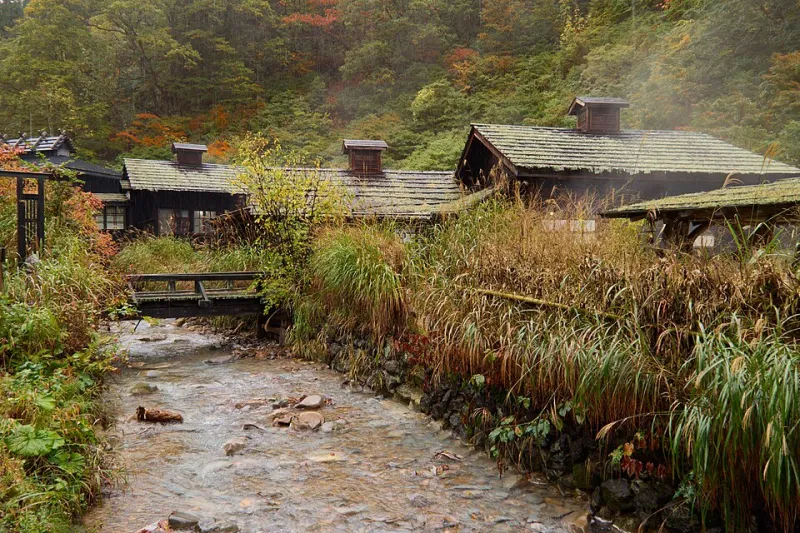
Photo: lumoplank, CC0, via Wikimedia Commons
There is a moment, usually about ninety seconds after you walk into your first Kyushu onsen, when your brain starts asking unhelpful questions. Where do I put this towel? Is this water too hot? Am I supposed to say something? Why is everyone so quiet? The answers are usually simple. The panic is optional.
Kyushu is one of Japan's great hot spring regions. Beppu has more steam than some American cities have traffic. Kurokawa is a postcard of ryokan lights and river mist. Ibusuki buries you in warm sand. Kirishima lets you soak while a volcano pretends not to notice. But the etiquette can feel like a secret handshake if you did not grow up with it. This is not a rulebook. Think of it as a field guide from someone who has been the confused person in the changing room.
First, the Towel
You will see two towels in many ryokan: a small one and a big one. The big one is for drying off after. The small one is for modesty, washing, and general management. Do not put either towel in the bath. Do not let the small towel float around like a lost jellyfish. Fold it and leave it on the edge, or balance it on your head if you want to look like you know what you are doing.
The other first-timer mistake is the swimsuit. Unless a specific facility says otherwise, onsen are enjoyed without one. This is not a dare. It is just the custom. You will be in a single-sex bath, usually with a locked changing room and a basket for your clothes. Bring the small towel, leave your phone in the locker, and keep your eyes on your own business. That last part is not a rule posted on the wall. It is the whole vibe.
The Bath Is Not a Pool
Before you get in, wash. Really wash. Most bathhouses have a row of low showers and stools, with soap and shampoo provided or available for a small fee. Sit down. Rinse off. Scrub. Rinse again. The bath is for soaking, not for cleaning. Soap and shampoo stay at the washing station. This is the one etiquette point that locals notice immediately, and it is also the one that makes the soak better for everyone.
Water temperatures vary. Some baths are pleasantly warm. Some are honest-to-goodness hot. Ease in. Do not plunge. Do not splash. If it feels too hot, get out. There is no prize for pretending your skin is not sending urgent messages to your brain. Many baths have a cooler tub nearby. Use it. Drink water before and after.
Silence Is Part of the Architecture
Kyushu onsen can be social, but the bathing area is usually quiet. Not silent in a scary way. Quiet in the way a library is quiet when everyone has agreed to be decent. You can say hello. You can ask a question in a low voice. You can talk with a friend if the room is not packed. But do not treat the bath like a hot tub at a hotel pool. No loud stories. No phone calls. No filming. Phones should stay in the locker, not because anyone is going to call security, but because the bath is one of the last places where nobody is performing for a camera.
That quiet is not an exclusion. It is an invitation. Once you stop worrying about what to say, you start noticing things: the steam moving across the ceiling, the sound of water spilling over the edge, the wooden bucket knocking against stone. The silence is part of the experience, not a gap in it.
Old Bathhouses Have Their Own Logic
Not every onsen is a polished ryokan with slick signage and a gift shop. Some are neighborhood bathhouses with chipped tiles, low stools, and a ticket machine that looks older than you. These places are treasures, but they ask a little more of you. Watch what other people do. Copy them. If you are unsure where to put your shoes, look for the cubbies. If you are unsure which bath is which, ask. A simple sumimasen goes a long way.
Tattoo policies vary. Some facilities are fine with tattoos. Some ask you to cover them. Some say no. Check ahead if this matters to you. Do not argue with the front desk. Find another bath. Kyushu has plenty.
Gentle Warnings for First-Timers
Do not drink alcohol before you soak. Do not stay in until you feel dizzy. Do not put your head underwater in a bath that is hotter than you expect. Do not run on wet tile. Do not leave your towel in the water. Do not use soap in the tub. Do not stare. Do not take photos. Do not treat the sand bath in Ibusuki like a beach day; you will be buried in warm sand by staff, and you will need to follow their lead.
If you have long hair, tie it up. If you have a medical condition, talk to your doctor before you spend an hour in hot water. If you are visiting a small bathhouse, bring cash. If you are visiting in winter, bring a warm layer for the walk back. These are not exotic rules. They are the same common sense you would use at a public pool, translated into a different cultural key.
The Exit Matters Too
When you leave the bath, dry off before you go back into the changing room. Put your small towel in your bag, not on the floor. Drink something. Sit for a minute. The goal is not to prove you can handle the heat. The goal is to feel like a human being again.
And if you get the towel wrong, relax. Nobody is keeping score. The worst first-timer mistake is not the wrong towel. It is spending the whole soak worrying about the wrong towel.