Living on the Volcano: The Uncomfortable Math of Mount Aso
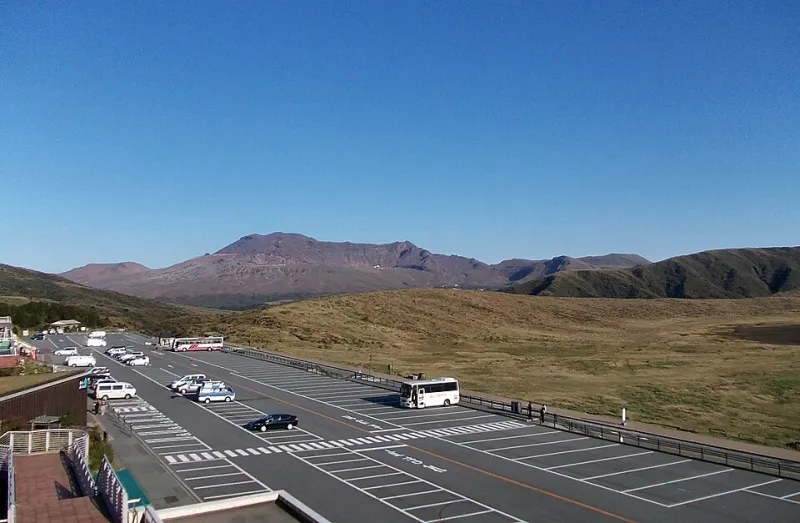
Photo: STA3816, CC BY-SA 3.0, via Wikimedia Commons
Let's start with the part that makes no sense on paper. Mount Aso, in the middle of Kumamoto Prefecture, is one of the largest calderas on Earth — roughly the size that could swallow a decent American metro area. It erupts. Not in a geological-timescale, forget-about-it way. In a check-the-alert-level-this-morning way. People farm inside its collapsed crater. Cattle graze on slopes that have buried villages in mud before.
And yet: property there isn't cheap, the grasslands are jealously maintained, and the towns around the caldera keep investing in themselves. To an American used to hurricane evacuations and wildfire insurance nightmares, this looks like either denial or madness. Spend a week there and you realize it's neither. It's a system.
The Fertile Problem
Here's the uncomfortable logic: the reason Aso's farmland is spectacular is the reason it's dangerous. Volcanic soil, grasslands, and the famous raised bog where they grow premium biroudo onions all exist because of the mountain's temper. The famous grazing meadows — the somo that make the caldera look like a postcard of Scotland with vending machines — survive because humans have burned and maintained them for over a thousand years, partly to keep the volcano's edges productive.
You cannot take the risk out of Aso without taking the reason anyone lives there out too. Locals understand this trade at a level that feels almost transactional. The volcano pays the mortgage. The volcano might foreclose. Both facts sit on the kitchen table.
Risk as Routine, Not Emergency
What struck me most, talking to residents, is how boring they've made the danger. Eruption alert levels are checked like weather. School evacuation drills happen with the same shrug as fire drills in Ohio. When Aso's alert level rises, farmers don't panic — they adjust, moving equipment, checking on livestock, watching the official channels the way a Floridian watches the tropics in September.
Compare that to the American relationship with risk, which tends to oscillate between total denial and total catastrophe. We build in floodplains, then act betrayed when water arrives. We underinsure, then litigate. Kyushu's approach isn't braver or smarter per person — it's smarter per system.
The Money Question
The economics deserve a hard look, because this is where the US comparison gets sharp. Japan's disaster insurance framework, government-backed earthquake coverage, and building codes shaped by decades of seismic hard lessons mean that risk around Aso is, to a degree, socialized. Nobody in the caldera is one bad morning away from total ruin with no recourse. The shared-pool model means the mountain's danger is priced into everyone's premiums, not dumped on the unlucky.
Is that fair? Arguably not in a libertarian frame — why should someone in Nagasaki subsidize caldera real estate? But flip it around: the onions, beef, and tourism that flow out of Aso feed the whole region. The risk and the reward are produced in the same place. Charging them to the same account is just honest accounting.
What the US Could Steal
Three things, honestly. First: normalization. Alert levels as casual small talk beat panic every time. Second: maintenance culture — the controlled grassland burns around Aso are risk reduction disguised as tradition, and they work. Third: the refusal to treat evacuation as failure. In Aso, leaving when the mountain says so isn't weakness; it's citizenship.
There's something humbling about a town that builds its identity around a thing that could destroy it, and refuses to either worship or ignore that fact. Americans in fire country, flood country, and fault country might find the Aso mindset useful — not as romance, but as practice.
The mountain doesn't care what you believe. But it does seem to respect a community that's paying attention.