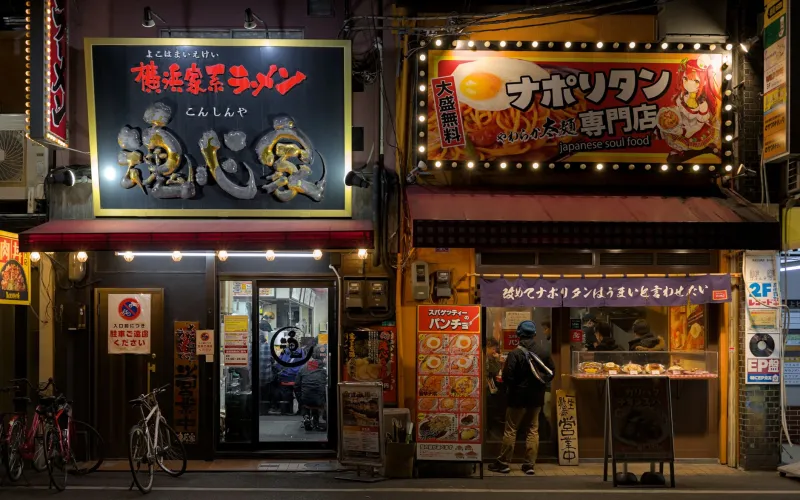
Slower On Purpose: The Unexpected Career Advantages of Choosing Kyushu Over Tokyo
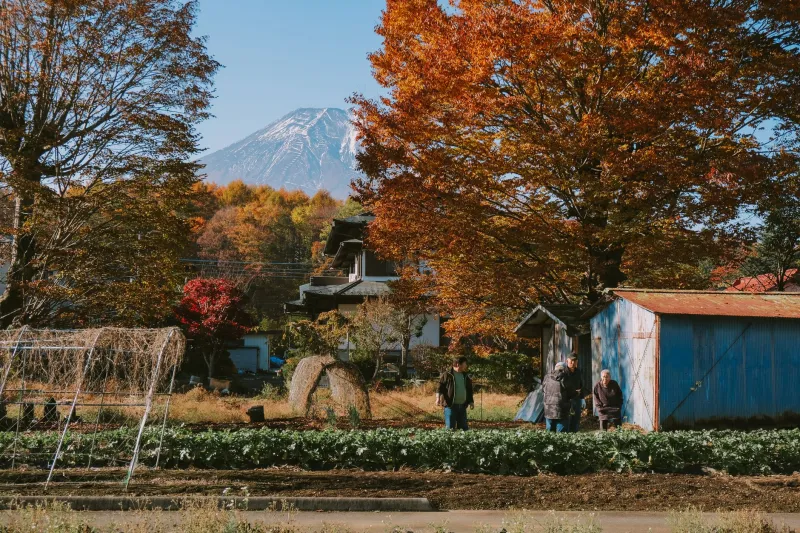
There's a joke that circulates quietly among the expat crowd in Fukuoka: "I came here for a month and accidentally stayed three years." It's funny because it's almost universally true. Something about Kyushu has a way of making people recalibrate what they actually want from their professional lives — and then refuse to give it back.
While the rest of the world has spent the better part of the last decade debating work-life balance in op-eds and LinkedIn posts, Kyushu has been quietly living it. Not as a trend. Not as a corporate wellness initiative. Just as the default setting.
The Numbers That Don't Lie
Let's start with the economics, because they're hard to argue with. A one-bedroom apartment in a desirable Fukuoka neighborhood runs somewhere between $600 and $900 a month — this in a city with bullet train access, an international airport, and a food scene that routinely draws chefs from New York and Los Angeles who leave visibly humbled. Compare that to a comparable setup in Tokyo, where $1,500 gets you something the size of a generous closet, and the math starts doing its own talking.
But the cost-of-living gap isn't just about rent. Groceries sourced from Kyushu's legendary agricultural and fishing networks cost less and are fresher. Commutes, where they exist at all, are shorter. And the social pressure to perform conspicuous busyness — a Tokyo sport practically elevated to an art form — simply evaporates.
For remote workers whose income is pegged to US or Tokyo salaries, the arbitrage is almost embarrassing. "I'm earning the same as I was in San Francisco," says Marcus Delray, a UX designer originally from Oakland who relocated to Nagasaki two years ago. "But I'm actually saving money now. And I have a garden. I didn't know I wanted a garden until I had one."
What Tokyo Costs You That Doesn't Show Up on a Spreadsheet
The economists have a term for it — opportunity cost — but in practice it's less abstract than that. Workers in Japan's capital regularly clock some of the longest commute times in the developed world. The culture of karoshi (death by overwork) isn't a myth; it's a documented public health phenomenon. And even for foreigners who sidestep the most extreme pressures, Tokyo has a particular way of consuming your hours, your energy, and your ability to think clearly.
Kyushu operates on a different frequency. Partially it's geographic — the region sits at the southwestern tip of Japan's main island chain, far enough from the capital that its rhythms never fully synced with Tokyo's relentless tempo. Partially it's cultural — Kyushu has long prided itself on a kind of stubborn regionalism, a resistance to being absorbed into the homogenizing pull of the metropolis.
The result is something that sounds almost radical in the context of modern work culture: people here tend to stop when the day is done.
"My colleagues in Tokyo would message me at 11 p.m. expecting an answer," says Priya Nambiar, a marketing consultant from Austin who now works remotely out of Kumamoto. "Here, my neighbors are having dinner with their families at 7. There's a social contract around time that I didn't even realize I'd been missing."
The Productivity Paradox
Here's the counterintuitive part that tends to surprise people: many remote workers who relocate to Kyushu report that their actual output improves. Not marginally — substantially.
The research on this isn't Kyushu-specific, but it tracks. Chronic stress degrades cognitive function. Long commutes erode focus. The ambient noise of urban hyperactivity — the notifications, the social obligations, the sheer visual and auditory stimulation of a megacity — is metabolically expensive. When you remove those drains, the brain tends to do what it's actually good at.
"I finished a project in Kyushu in three weeks that had been stalled for four months in Tokyo," says James Whitfield, a software developer from Seattle who relocated to Oita Prefecture. "I kept waiting for the catch. There wasn't one."
This isn't to romanticize rural isolation — Fukuoka in particular is a genuinely cosmopolitan city with strong startup infrastructure, coworking spaces, and a tech community that punches well above its weight. Kyushu's advantage isn't absence of civilization. It's the presence of a civilization that hasn't decided busyness is a virtue.
The Identity Shift Nobody Warns You About
What the relocation guides don't tell you — and what several people we spoke to mentioned unprompted — is that moving to Kyushu eventually forces a confrontation with the question of what you're actually working for.
In a city built around ambition and status signaling, those questions are easy to defer. There's always another goal, another benchmark, another person doing slightly better who you can use as a reference point. Kyushu strips that scaffolding away. The mountains don't care about your title. The ramen counter doesn't ask about your quarterly numbers.
"It sounds cheesy," admits Delray, "but I had to figure out what I actually liked doing versus what I was doing to impress people. That's a harder question than it sounds."
For many, the answer turns out to involve staying exactly where they are — in a region Japan's central media occasionally writes off as declining, slowing down, falling behind. From the inside, it looks a lot more like choosing well.