Counter Culture: What You're Getting Wrong at Kyushu's Late-Night Food Stalls
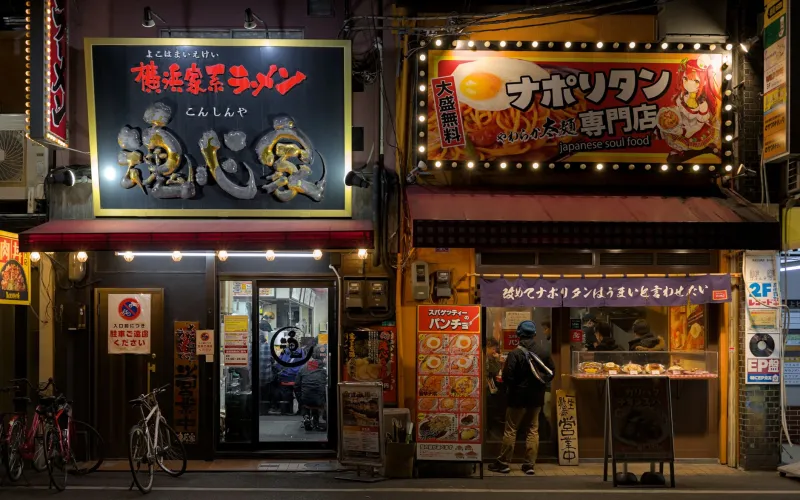
It's 11:30 on a Tuesday night in Fukuoka's Nakasu district, and the canal is doing what it always does after dark: glittering with the reflection of neon, smelling faintly of grilled pork fat and cigarette smoke, and hosting a loose confederation of people who have absolutely nowhere else they'd rather be. The yatai are open. Kyushu is eating.
If you've read anything about Fukuoka food culture — and at this point, every major American food publication has run the piece — you know about the yatai. These small, semi-permanent street stalls, sheltered by canvas awnings and crammed with maybe a dozen seats, are routinely described as one of Japan's great culinary experiences. What those articles tend to skip over is the part where you sit down and immediately reveal yourself as someone who has no idea what they're doing.
This is that article.
The Stall You Choose Is a Statement
First things first: not all yatai are created equal, and the one you end up at says something about you — at least to the people already sitting there.
Fukuoka's yatai scene is the most famous, but similar stalls operate throughout Kyushu, each with their own microculture. In Fukuoka, the Tenjin area yatai tend to draw office workers unwinding after long days; the Nakasu stalls pull a more mixed crowd — tourists, regulars, the occasional visiting chef on a research trip. Nagahama, closer to the fish market, is where you go if you're serious about the food and less interested in being seen.
Locals have their stall. It's not always articulated explicitly, but there's a regularity to who shows up where that a few visits will make obvious. Walking past three stalls to sit at a fourth, for reasons no one can quite explain, is completely normal behavior here. The chemistry of a counter matters.
Sit First, Ask Second
American dining culture tends to front-load the transaction: you want to know the menu, the specials, maybe whether the kitchen can accommodate a dietary restriction, before you commit to a seat. At a yatai, this approach reads as mildly chaotic.
The etiquette is simpler and stricter: sit down, make eye contact with the proprietor or server, and wait. You'll get a drink question almost immediately — beer, shochu, or something soft. Answer it. Then look around. Watch what other people ordered. The menu, where one exists at all, is often a handwritten board or a laminated card that's been through about forty rainy seasons. Some stalls don't post one at all.
Ordering what the person next to you is having is not considered weird. It's often considered sensible.
The Tonkotsu Argument (Yes, There Is One)
Kyushu is the homeland of tonkotsu ramen — that rich, pork-bone broth that's conquered cities from Los Angeles to London — and within Kyushu, the debate over whose version is superior is conducted with the kind of intensity usually reserved for college football rivalries.
Fukuoka will tell you its Hakata-style ramen, with thin straight noodles and a milky white broth, is the original and correct version. Kumamoto will point to its ramen's addition of garlic oil and a slightly darker broth as proof of evolutionary superiority. Kagoshima will calmly note that its version uses a cleaner, more nuanced pork stock and invite you to compare.
As a visitor, the correct move is to try all three, form a genuine opinion, and then keep that opinion to yourself unless directly asked. You are a guest in a regional argument that has been running for generations. Step lightly.
What the Counter Is Actually For
Here's something the food writing often glosses over: a yatai counter is not primarily a surface for eating. It's a social infrastructure.
The proximity is intentional. You are shoulder-to-shoulder with strangers who will, within about twenty minutes and one round of drinks, stop being strangers. The proprietor — usually working alone or with one other person in a space roughly the size of a walk-in closet — is simultaneously cook, bartender, host, and conversation anchor. They know the regulars. They're sizing up the newcomers. A good yatai owner can read a counter the way a good bartender reads a room.
Talking to your neighbor is expected. Staring at your phone is tolerated but quietly judged. Bringing a large group and monopolizing the conversational energy of the whole stall is the main thing you can do to genuinely annoy people.
The Dishes That Have Addresses
Kyushu's street food isn't just regional — it's hyper-regional in ways that matter. Mentaiko (spicy pollock roe) belongs to Fukuoka in a way that's almost possessive; ordering it elsewhere in Kyushu is fine, but Fukuoka will want you to know the debt. Chicken nanban, the sweet-and-sour fried chicken dish topped with tartar sauce, is a Miyazaki production through and through. Try to claim it for anywhere else and you'll hear about it.
These aren't just trivia points. Understanding that certain dishes are expressions of place — not just ingredients and technique, but identity and pride — changes the way you eat them. That bowl of ramen is a neighborhood's argument about what ramen should be. That skewer of chicken is someone's grandmother's recipe, scaled up and served to strangers at midnight.
Eat accordingly.
The Last Rule
Leave when you're done. Not immediately — linger, finish your drink, let the conversation reach a natural resting point. But yatai seats are finite, the night is long, and someone is probably standing nearby waiting for exactly where you're sitting.
Thank the proprietor on your way out. Not effusively — a simple nod and a genuine gochisosama deshita (thanks for the meal) is plenty. They'll remember you next time, and next time, you'll already be a little less of a stranger.