Nobody Owns the Chicken: Inside Kyushu's Deliciously Petty Prefectural Food Feuds
If you want to start an argument in Kyushu, you don't need to bring up politics or sports. Just walk into a restaurant in Miyazaki City and casually suggest that maybe — just maybe — chicken nanban didn't actually originate here. Then step back and give yourself some room.
Food rivalries exist everywhere. Texas and Kansas City have been bickering about barbecue for generations. New York and New Haven will apparently never agree on pizza. But there's something particularly entertaining about the way Kyushu's prefectures go at each other over culinary bragging rights — partly because the stakes feel so personal, and partly because the dishes in question are so deeply woven into how these communities see themselves.
The Chicken Nanban Situation
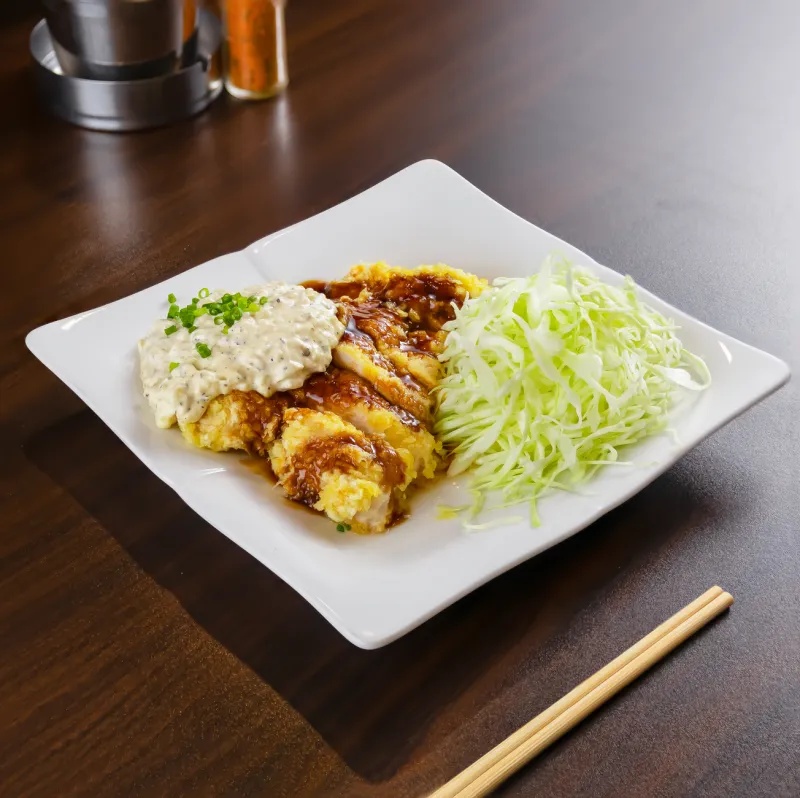
Let's start with the big one. Chicken nanban — fried chicken pieces dunked in a sweet vinegar sauce and topped with a generous spoonful of tartar sauce — is one of the most beloved comfort foods in all of Japan. It shows up on school lunch menus nationwide. Convenience stores sell their own versions. It has, by any reasonable measure, gone fully mainstream.
But where did it come from?
Miyazaki will tell you: here. Specifically, from a Western-style restaurant called Ogura in Nobeoka City, where a chef named Abe Mitsuo reportedly developed the dish in the 1960s. Miyazaki has leaned into this origin story hard — the prefecture actively promotes chicken nanban as a flagship dish, and restaurants across the region serve their own interpretations with a kind of civic pride that borders on obligation.
"This is our dish," says Yamamoto Setsuko, who runs a small lunch spot in Miyazaki City that has been serving chicken nanban for over thirty years. "People come from all over Japan to eat it here. That means something."
The complication is that there's a competing version of the story — one that locates the dish's development slightly differently, with different chefs and different timelines. Food historians tend to get careful and hedging when pressed on the specifics, which is academic-speak for "it's complicated." What's not complicated is how people feel about it.
Oita's Counter-Programming
A few prefectures to the north, Oita has its own chicken-forward agenda. Tori soboro don — a bowl of ground chicken simmered in a sweet-savory sauce, served over rice — is Oita's answer to the "what do you eat here" question, and locals will volunteer that answer before you've finished asking.
Oita also claims toriten, a regional take on tempura that uses chicken instead of seafood, which is practically heretical by traditional tempura standards and completely delicious by any standard that matters. There's a running low-grade rivalry between Oita and Miyazaki over who has the superior chicken culture, which is funny when you consider that Miyazaki actually produces a significant portion of Japan's poultry and could theoretically claim a kind of upstream advantage.
"Miyazaki has the birds," jokes Nakamura Ryoji, a food writer based in Fukuoka who has spent years documenting Kyushu's regional cuisines. "But Oita knows what to do with them."
Nakamura is being playful, but he's also pointing at something real. Regional food identity in Japan isn't just about ingredients — it's about technique, history, and the specific ways a community has adapted what's available into something that feels like home.
The Ramen Situation Is Its Own Universe
No discussion of Kyushu food rivalries is complete without at least acknowledging the ramen dimension, which is less a rivalry and more a full multi-front conflict with no clear end in sight.
Fukuoka's tonkotsu ramen — the rich, milky pork bone broth that has conquered ramen shops from Los Angeles to London — is probably the most internationally recognized thing to come out of Kyushu. But within Fukuoka itself, there's already a sub-rivalry between Hakata-style and Kurume-style preparations, with Kurume locals insisting they got there first and Hakata fans pointing out that nobody outside Japan knows what Kurume is.
Meanwhile, Kumamoto has its own tonkotsu tradition, distinguished by the addition of mayu — blackened garlic oil — that gives the broth a deeper, smokier character. Kumamoto ramen fans are quietly confident in a way that suggests they've made peace with being underrated and have decided to enjoy it.
"Every prefecture thinks their ramen is the real one," says Nakamura. "And every prefecture is wrong, and also right. That's the thing about regional food — authenticity is always local."
What the Fighting Is Really About
Spend enough time talking to people about these rivalries and a pattern emerges. Nobody is actually that angry. The arguments are real, but they're also a kind of performance — a way of asserting that your place matters, that the specific thing your community makes is worth defending.
For prefectures like Miyazaki, which doesn't have a major city on the scale of Fukuoka and doesn't get the same tourist traffic as Nagasaki, having a dish that the whole country recognizes is genuinely significant. It's a form of visibility.
"When someone in Tokyo orders chicken nanban, they're thinking of Miyazaki," says Yamamoto. "Even if they don't realize it. That connection exists. I think that's worth something."
Food historians tend to be more philosophical about the whole thing. The dishes that become the subject of these territorial disputes are almost always the ones with murky enough origins that multiple communities can make a legitimate claim. If the history were clean and documented, there'd be nothing to argue about. The argument itself is the point.
A Rivalry Worth Having
The American parallel that comes to mind isn't really barbecue or pizza — it's something more like the way different regions of the South each claim to have the best version of fried chicken, or the way every coastal state in New England insists its lobster roll is the definitive one. The dish is almost secondary to what the argument represents: a community saying we made something worth fighting over.
Kyushu's food wars are, in the end, love stories wearing the costume of a dispute. The chicken nanban debate isn't going to be resolved anytime soon, and honestly, it shouldn't be. The moment everyone agrees, something gets lost. The arguing is how these communities stay attached to the thing they made — how they keep tasting it, talking about it, serving it to strangers, and insisting, with complete sincerity, that nobody else does it quite right.
They're probably all correct. Come hungry and find out for yourself.