From Coal Dust to Canvas: The Kyushu Mining Towns Reinventing Themselves Through Art
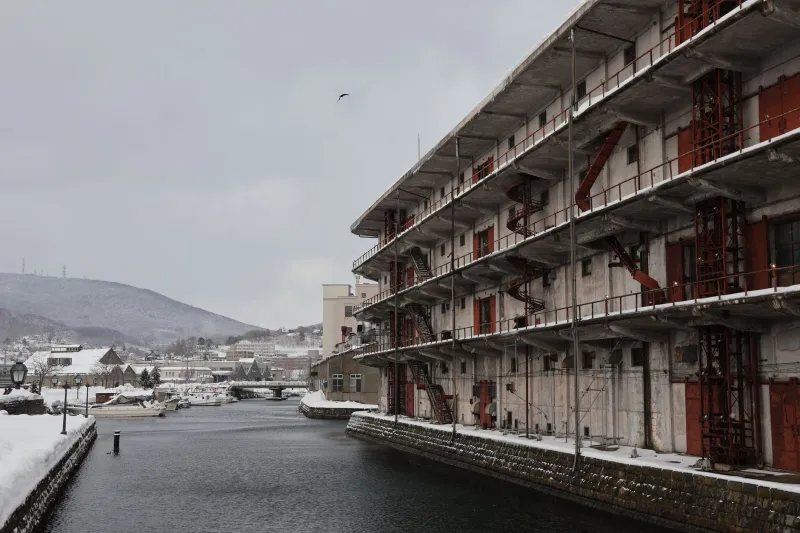
There's a particular kind of silence that settles over a town after the industry leaves. It's not peaceful exactly — it's more like the quiet of a held breath. Walk through Omuta in southern Fukuoka Prefecture on a weekday afternoon and you'll feel it. Storefronts that once sold work boots and lunch pails sit empty. Streets that used to run black with foot traffic are wide and still.
But step inside the right building — a converted machine shop, a repurposed coal-sorting facility, an old company dormitory with fresh paint on the walls — and you'll find something unexpected: people making things. Paintings, ceramics, experimental music, community theater. Kyushu's post-coal towns are quietly staging one of the more interesting cultural experiments in rural Japan, and the rest of the world is just starting to pay attention.
The Ruins That Became Raw Material
Kyushu powered Japan's industrial rise. The Chikuho coalfield, which stretches across northern Fukuoka Prefecture, once produced a third of the country's coal output. Nagasaki's Hashima Island — better known as Gunkanjima, or Battleship Island — was so densely populated it reportedly held the world's highest population density at its peak in the 1950s. When the coal ran out, or when cheaper imports made it irrelevant, these places emptied fast. By the 1970s and 80s, entire communities had been hollowed out.
What's left behind is, architecturally speaking, extraordinary. Industrial ruins on a scale that most American cities demolished decades ago. Reinforced concrete structures with bones solid enough to last another century. Massive open floor plans. Skylights that were designed to let workers see what they were doing, and that now flood studios with the kind of natural light painters will drive hours for.
"The buildings were never meant to be beautiful," says Keiko Morimoto, a ceramicist who relocated from Osaka to Tagawa — another former coal hub in Fukuoka — six years ago. "But they have this incredible honesty to them. Nothing is hidden. The structure is the structure. I find that really freeing to work inside."
Moremoto now rents studio space in a converted mine administrative building for a fraction of what she'd pay in any major Japanese city. She's not alone. Over the past decade, Tagawa has attracted a small but growing colony of artists, drawn partly by cheap rents and partly by a city government that has been unusually aggressive in courting creative residents.
What the Officials Are Betting On
Local government officials in post-industrial Kyushu have watched their populations age and shrink for long enough that unconventional ideas are starting to sound practical. The standard playbook — attract a factory, offer tax incentives to a manufacturer — hasn't delivered the results anyone hoped for. Culture is the new pitch.
Tagawa's city government partnered with the Coal Mining Historical Museum to develop artist residency programs that bring in creators from across Japan and, increasingly, from overseas. The idea isn't just to fill empty buildings. It's to make Tagawa the kind of place that shows up on someone's radar — a reason to visit, a reason to stay.
"We're not trying to replace what coal was," says a city planning official who has been involved in the residency program since its early days. "That's gone. What we're trying to do is give people a reason to be curious about this place again."
In Nagasaki Prefecture, similar conversations are happening around sites connected to the region's industrial heritage. While Gunkanjima itself is a UNESCO World Heritage Site and draws tourists by the boatload, the communities on the mainland that supported that industry are less celebrated and, frankly, less visited. Some of them are experimenting with arts programming as a way to extend the cultural story beyond the island itself.
The Artists Who Showed Up First
Before there were official programs and city partnerships, there were individual artists who simply showed up because the space was cheap and the community was welcoming. That scrappy early wave is still visible in places like Iizuka, where a cluster of studios occupies what used to be a company housing block.
Hiroshi Tanaka, a printmaker in his late 40s, arrived in Iizuka almost by accident — a friend of a friend had a space, the rent was almost nothing, and he was tired of Tokyo. That was eleven years ago. He's watched the neighborhood shift from mostly empty to something resembling an actual arts district, with galleries, a small café, and occasional open-studio weekends that draw visitors from Fukuoka City.
"When I got here, people looked at me a little sideways," he says, laughing. "An artist? What does that mean? But the older residents, the ones who worked in the mines or whose parents did — they're actually very proud of the history here. They want someone to pay attention to it. Art can do that."
That relationship between artists and longtime residents is one of the more nuanced aspects of this transformation. Unlike some gentrification stories in American cities, where creative communities are blamed for displacing working-class residents, these Kyushu towns are in many cases actively inviting artists in — not because rents are getting pushed up, but because the alternative is continued decline.
What Gets Lost, What Gets Found
None of this is without complication. There are real questions about sustainability — what happens when the grant money runs out, or when a city government changes priorities? There's also the risk of aestheticizing poverty, of turning genuine hardship into a backdrop for someone else's creative journey.
Moremoto is thoughtful about this. "I try to stay connected to what this place actually was," she says. "I use local clay when I can. I talk to people who worked here. I don't want my studio to be some bubble that's just floating above the history."
The most successful projects seem to be the ones that treat the industrial past as a participant rather than a prop. In Tagawa, an ongoing oral history project pairs artists with former mine workers, producing collaborative works — prints, recordings, textile pieces — that try to hold both the weight of what was lost and the possibility of what's being built.
It's not a perfect solution to post-industrial decline. No single thing is. But standing in a sunlit studio in a building that once processed coal, watching someone make something with their hands, it's hard not to feel like something real is happening here — something that Kyushu's coal towns, after decades of that held-breath quiet, have genuinely earned.