Before the Recipe Dies: Meet the Kyushu Home Cooks Racing to Save Their Grandmothers' Dishes
The Dish That Almost Vanished
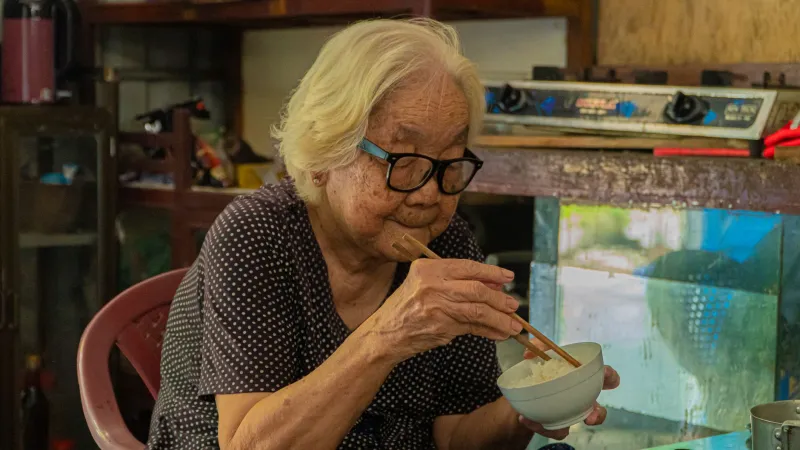
Misaki Tanabe didn't think much about her grandmother's nabeyaki until the woman who made it was gone.
The dish — a hyper-local Kumamoto variation of a simmered pot meal, built around a specific cut of pork that local butchers barely carry anymore, seasoned with a fermented miso paste her grandmother made from scratch every autumn — existed nowhere outside that kitchen. No cookbook. No restaurant. No YouTube tutorial. Just an 84-year-old woman who made it every winter and a family that assumed she always would.
"I kept thinking someone else in the family had written it down," says Tanabe, now 31 and living in Fukuoka. "Nobody had. I spent two years trying to reverse-engineer it from memory and from what my mom could remember. I'm still not sure I got it right."
That experience turned into something bigger. Tanabe now hosts monthly pop-up dinners in Fukuoka's Yakuin neighborhood where she and a rotating cast of other home cooks serve dishes they've rescued — or are actively trying to rescue — from the edge of disappearing.
A Grassroots Archive
What Tanabe is doing has a loose, informal parallel across Kyushu. It doesn't have an official name or a central organization. There's no nonprofit, no government grant (though some participants wish there were). It's more of a movement that emerged from a shared anxiety: the realization that the most authentic regional food in Japan often lives in the heads of people in their eighties, and time is running out.
The dishes at risk aren't the famous ones. Tonkotsu ramen will be fine. Mentaiko is not going anywhere. What's endangered is the hyper-local stuff — the specific way a fishing village in Nagasaki Prefecture pickled its surplus mackerel, the sweet-savory dengaku that a particular mountain community in Oita made only during the fall harvest, the rice porridge variations that differed hamlet by hamlet across the Amami island chain.
These aren't dishes that ever had a shot at going viral. They're too specific, too tied to ingredients that require knowing someone, too dependent on techniques that take years to absorb. Which is exactly why the people trying to save them feel such urgency.
How the Rescue Actually Works
The methods vary, but a few patterns have emerged.
Some participants, like Tanabe, are doing it through cooking and serving — making the dish repeatedly until the muscle memory is there, then sharing it with people who might carry it forward. Others are going more documentary. Haru Fujisaki, a 28-year-old from Kagoshima who works in marketing by day, has spent the last three years driving to rural communities on weekends with a video camera and a notebook, sitting with elderly home cooks and recording everything she can.
"I'm not a chef. I'm not a food historian. I just got scared," she says. "My great-aunt made this dish called tofu no misoni — it sounds simple but the ratio of everything, the type of tofu, the way she finished it — it was completely specific to her. I thought, if I don't film this now, it's just gone."
Fujisaki's videos live on a private Instagram account she shares with family and a small community of people doing similar work. She's hesitant to go fully public. "Some of these recipes feel like they belong to a family or a village. I don't want to just put them out there for anyone to remix and monetize."
That tension — between preservation through sharing and preservation through protection — runs through the whole movement.
The Pop-Up as Living Archive
For those who've gone the public route, the pop-up dinner has become the format of choice. It works on multiple levels: it gets the dish in front of people, it generates conversation and sometimes crowdsourced memory ("My grandmother made something like this but with dried shrimp"), and it creates a small economic case for the recipe's survival.
In Nagasaki, a loosely organized collective called Obāchan no Te — roughly, "Grandmother's Hands" — has been running irregular pop-up events since 2022. Each dinner features dishes from a single region of Nagasaki Prefecture, cooked by younger people who learned them from older relatives, often with the older relatives present to correct mistakes in real time.
"The best moments are when the grandmother is sitting there watching someone cook her recipe and she says, 'No, no, the oil goes in later,'" laughs one of the collective's organizers. "That's the knowledge transfer happening right in front of you."
The events sell out quickly, largely through word of mouth and Instagram. The audience tends to be a mix of food-curious locals, expats living in Kyushu, and increasingly, visitors from mainland Japan and abroad who've heard about the project.
What's at Stake Beyond the Food
Food preservation is never just about food. The dishes being rescued carry geography, history, and identity inside them. A pickled fish preparation from a specific Nagasaki bay tells you something about how that community related to the sea, what they had in winter, how they fed themselves through lean years. Lose the dish and you lose a piece of that story.
This is something that resonates with the American experience too — think of the Gullah Geechee foodways of the Carolina coast, or the tamale traditions of specific Mexican-American communities in Texas, or the debate around who gets to claim and profit from soul food. The question of who owns a culinary tradition, and what it means when that tradition starts to fade, is not unique to Japan.
In Kyushu, the people doing this work are mostly in their twenties and thirties — a generation that grew up with global food culture at their fingertips but is now turning back toward the specific and the inherited. Social media, which could easily have been the enemy of this kind of slow, place-rooted cooking, has become one of its most useful tools.
The Recipe Isn't the Whole Thing
Everyone involved will tell you the same thing: writing down a recipe isn't enough. The ingredient sourcing matters. The equipment matters. The season matters. And some of what makes a dish what it is lives in the hands of the person making it — in the pressure of a knead, the sound of a simmer, the instinctive moment when they know it's done.
Tanabe is still working on her grandmother's nabeyaki. She thinks she's close. Last winter she made it for her mother, who took one bite and went quiet for a long moment.
"She said it tasted like the house," Tanabe says. "That's what I'm trying to save. Not just a recipe. The feeling of the house."