Forget the Train: In Kyushu, the Best Day Trip Leaves From a Dock
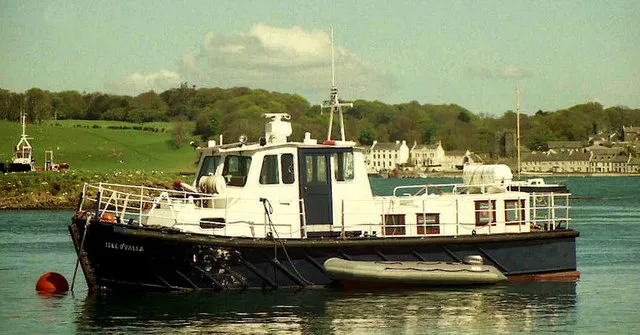
Photo: Albert Bridge, CC BY-SA 2.0, via Wikimedia Commons
On a damp Tuesday morning in November 2026, the most interesting thing in Fukuoka was not a temple, a tower, or a bowl of ramen. It was a ferry ticket the size of a receipt, bought from a machine at a small port, for about the price of a fancy coffee. The boat held maybe two dozen people. A woman carried a tray of mikan. A student slept against the window. A vending machine hummed in the corner like it was auditioning for a role in a documentary. Twenty minutes later, we were on an island.
That is the five-dollar ferry rule in Kyushu: some of the best day trips do not begin at a train station. They begin at a dock, with a schedule taped to a wall and a vessel that looks like it has seen things. The ride itself is the attraction. The port is the itinerary. The passengers are the show.
The Five-Dollar Rule
Let me be clear: five dollars is a vibe, not a guarantee. In 2026, short hops around Kyushu often land in the 200 to 600 yen range, which is roughly $1.50 to $4 at current exchange rates. Longer routes cost more. But the principle holds. You can spend less than a museum admission and end up somewhere that feels like a different version of Japan.
The train network in Kyushu is excellent. Use it. But trains move you through the region. Ferries move you into it. The scale changes. On a train, you watch scenery pass. On a small ferry, you watch a harbor shrink, gulls follow the wake, and a new island assemble itself out of the haze. It is slower. Slower is the point.
What the Port Tells You
A tiny Kyushu ferry port is not a transportation hub in the American sense. It is a room with chairs, a timetable, maybe a bathroom, and a vending machine that sells hot corn soup in a can. There may be a single ticket window. There may be no window at all. There may be a hand-painted sign telling you not to feed the seagulls.
Arrive early. Not because security is tight, but because the waiting is good. You will see fishermen sorting gear. You will see grandparents with plastic bags. You will see a kid in a school uniform doing homework on a bench. This is not a curated experience. It is just a place where people wait for a boat. That is why it works.
Bring cash. Many small ports and ferries still run on coins and bills. Bring a layer. The wind on the water is colder than the weather app suggests. Bring a snack. The island you are heading to may have one restaurant, and it may close at 2 p.m.
If you are new to this, start short. Nokonoshima, a short ferry from Fukuoka City's Meinohama Port, is a gentle introduction: a quick crossing, a park, and enough space to feel like you left the city even though you did not. Ainoshima, reached from Shingu Port, is even smaller and quieter, with cats, narrow lanes, and the distinct feeling that you have interrupted someone's afternoon nap. Sakurajima, from Kagoshima Port, is the big-screen version: a fifteen-minute ride across water to a volcano that steams like it has somewhere to be.
For a longer plunge, look at the Amakusa islands, Iki, or Tsushima. These are not casual hops. They require planning, weather checks, and a willingness to let the schedule be the boss. That is part of the fun. A ferry timetable is a small lesson in humility. The sea does not care about your content calendar.
How to Do It Without Being a Nuisance
Treat the ferry like public transit, not a cruise. Do not stand in the middle of the deck filming a TikTok while people are trying to get to work. Do not feed the birds unless the signage says it is okay. Do not leave trash on the bench. Say good morning when you board. It costs nothing and it changes the temperature of the room.
Check the return schedule before you do anything else. This is the single most useful piece of advice in this article. Island time is real, but the last boat is realer. Weather cancels sailings. If the wind is up, have a backup plan. If you are renting a car, confirm that the ferry takes cars and that you have a reservation. If you are on foot, confirm that the island has something open on the day you are visiting.
The Return Trip Is Part of the Story
The best moment on a Kyushu ferry is not the arrival. It is the return. The light goes gold. The island gets smaller. The same passengers are tired now. Someone is asleep. Someone is eating a rice ball. The vending machine glows. You have a little salt on your jacket and a ticket stub in your pocket. You did not check off a landmark. You just took a boat.
That is the five-dollar ferry rule. The destination matters, but the crossing is the souvenir. In a region full of famous trains and crowded buses, the small ferries are still the cheapest way to feel like you went somewhere strange and came back slightly different.