Barrel Rebels: The Kyushu Distillers Shaking Up Japan's Whiskey World One Small Batch at a Time
When most Americans picture Japanese whiskey, they imagine the polished giants — Suntory, Nikka, those gorgeous amber bottles with calligraphy labels and price tags that make your credit card flinch. What they probably don't picture is a converted shochu warehouse on the edge of a Kagoshima sweet potato farm, where a guy in rubber boots is sniffing a cask of something that might just upend the entire category.
Welcome to Kyushu's whiskey underground. It's loud, it's experimental, and it absolutely does not care about a hundred years of tradition.
The Island That Refused to Follow the Script
Kyushu has always been Japan's rebellious southern outlier — geographically, culturally, and apparently now in spirits production too. The region has centuries of shochu heritage baked into its identity, so it's no surprise that when local distillers started turning their attention to whiskey, they didn't arrive empty-handed. They brought with them a deep fluency in fermentation, a fearlessness about local ingredients, and zero reverence for the established Scotch-influenced playbook that defines most Japanese whiskey production.
"We didn't grow up dreaming about Speyside," says Tanaka Hiroki, head distiller at a small operation outside Kumamoto that launched just six years ago. "We grew up drinking shochu with our grandparents. That's in our DNA. Why would we pretend otherwise?"
Tanaka's distillery — fewer than ten employees, a single copper pot still, and a waiting list for allocations that stretches embarrassingly long — is one of a growing cluster of Kyushu producers rethinking what Japanese whiskey can actually be.
Local Ingredients, Global Ambitions
The ingredient conversation is where things get genuinely interesting. Mainstream Japanese whiskey production leans heavily on imported barley and established grain sourcing, chasing a consistency that satisfies collectors and blenders alike. Kyushu's newer distillers are flipping that logic entirely.
Some are incorporating locally grown barley from Oita and Miyazaki prefectures, coaxing flavors that carry a kind of place-specific character you simply can't fake. Others are going further. One Kagoshima producer has been quietly experimenting with partial mashing that incorporates a small percentage of the region's famous satsumaimo — the rich, earthy sweet potato that defines local shochu — into early fermentation stages. The result isn't a novelty gimmick. It's a whiskey with a subtle earthiness and depth that blind tasters in Tokyo couldn't quite place, but couldn't stop reaching for.
Water, too, is part of the story. Kyushu sits atop volcanic geology that filters groundwater through layers of ancient ash and mineral-dense rock. The spring sources feeding several of these distilleries have a mineral profile that's measurably different from the soft waters of Yamazaki or the colder highland sources up north — and distillers here will tell you that difference shows up in the glass.
Aging Without Apology
Here's where the real controversy starts. Age statements have long been the prestige currency of the whiskey world. A 12-year, an 18-year, a 25-year — these numbers carry weight, imply patience, signal seriousness. And for a region whose distilleries are mostly less than a decade old, that game is literally impossible to play.
So Kyushu's distillers aren't playing it.
Instead, they're leaning hard into accelerated maturation research — smaller casks that increase wood contact, climate-controlled warehouses that deliberately exploit Kyushu's humid, warm summers to speed the aging conversation between spirit and barrel. Some are experimenting with casks that previously held local shochu or umeshu, adding flavor layers that no Scottish cooper ever imagined. One Fukuoka-based producer is aging a portion of their stock in barrels made from Japanese mizunara oak, the same rare, sandalwood-scented wood that Suntory uses in limited releases that sell for hundreds of dollars per bottle — except here, it's showing up in a product that costs a fraction of that.
"People come in with these expectations built on age and brand legacy," says Yamashiro Keiko, who co-founded a Nagasaki-area distillery with her husband after years working in the region's wine import business. "And then they taste what we're making, and the conversation changes. It stops being about credentials and starts being about what's actually in the glass."
The Collectors Are Already Circling
Word travels fast in whiskey circles, and Kyushu's small-batch producers are starting to feel the international attention. Specialty importers in the US — particularly those focused on craft and artisan spirits rather than legacy brands — have begun making the trek south, and a handful of Kyushu distilleries have quietly started shipping limited allocations to American retailers in major markets.
In cities like Portland, Austin, and Chicago, where the craft spirits scene has trained consumers to seek out the unfamiliar and reward the adventurous, Kyushu whiskey is landing with real enthusiasm. It doesn't hurt that the price points, while not cheap, are considerably more accessible than the stratospheric premiums commanded by established Japanese marques.
Whiskey bloggers and YouTube reviewers — a surprisingly influential force in moving product in the US market — have started to take notice too. A few early reviews have gone viral in spirits communities, describing profiles that reviewers struggle to categorize: "like a Japanese whiskey that went to Okinawa for a year and came back changed," wrote one popular American reviewer, which is either the most accurate or least accurate description imaginable, depending on who you ask.
More Than a Trend
It would be easy to frame all of this as a trend — the craft spirits wave reaching Japan's southern coast, destined to peak and recede like every other artisanal boom. But spend time talking to the people actually making this whiskey, and that reading starts to feel too simple.
What's happening in Kyushu looks less like a trend and more like a genuine regional identity asserting itself through a new medium. The same instinct that makes Fukuoka insist its ramen is categorically different from Tokyo's, or that makes Kagoshima proud of its shochu in a sake-dominated national conversation — that instinct is now showing up in how these distillers think about their whiskey. It's not a reaction to anything. It's just Kyushu being Kyushu.
Bold, a little stubborn, and completely convinced that the rest of the country will catch up eventually.
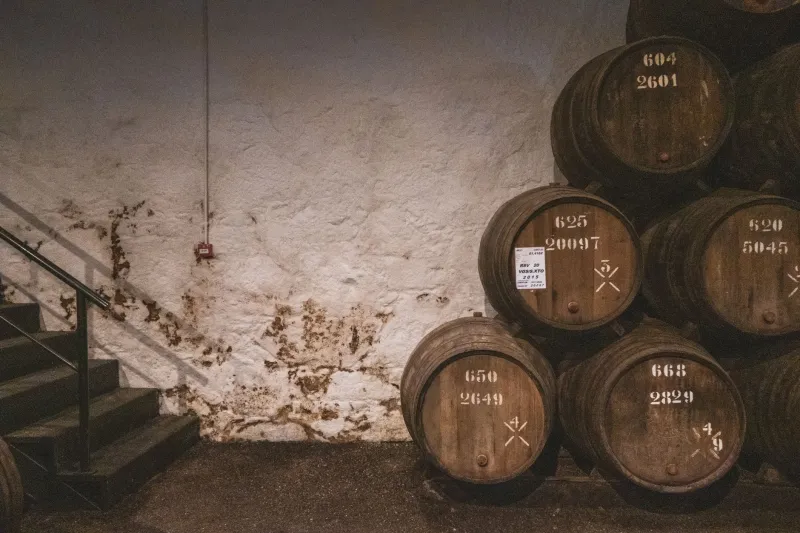
The barrels are aging. The waiting lists are growing. And somewhere in a converted warehouse outside Kumamoto, a guy in rubber boots is about to crack open something worth paying attention to.