Rooted and Thriving: Why Kyushu's Sharpest Minds Are Saying No to Tokyo — and Winning
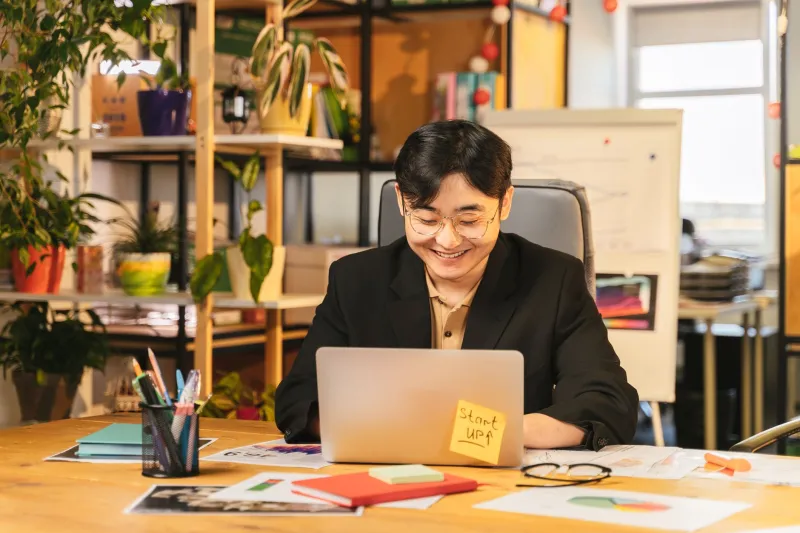
Somewhere in a converted warehouse on the outskirts of Fukuoka, a 31-year-old software engineer named Kenji is turning down his third Tokyo offer this year. The package — a top-tier salary, relocation bonus, the works — would make most people's hands shake just reading the email. Kenji read it over a bowl of tonkotsu, replied politely, and got back to work.
This is not a rare story in Kyushu right now. It's practically a pattern.
The Offer Nobody Wants to Take
For decades, the script in Japan has been pretty straightforward: get good, get noticed, get on a shinkansen to Tokyo. The capital has always functioned as a kind of gravitational center — pulling talent inward, concentrating it, rewarding those who made the leap. Regional cities were understood to be stepping stones, not destinations.
But something shifted. And Kyushu, of all places, seems to be where that shift is most visible.
Talk to the founders, engineers, and designers who are actively building careers here — and choosing to stay — and you start to hear the same things over and over. It's not that Tokyo stopped calling. It's that the call stopped sounding like an opportunity and started sounding like a trade-off they weren't willing to make.
"The math just doesn't work the way people assume it does," says Yuka, a UX designer who runs a small product studio in Kumamoto. She fielded inquiries from two major tech firms last year, both headquartered in Tokyo. "Sure, the salary is higher. But the rent, the commute, the hours — you're not actually gaining anything. You're just trading one kind of stress for a more expensive one."
What They're Building Instead
The more interesting question isn't why people are staying. It's what they're staying to do.
Fukuoka has quietly become one of Japan's most active startup ecosystems. The city's Startup Visa program — one of the first of its kind in Japan — has been pulling in international founders for years, and that cross-pollination has had an effect on local culture. There's a sense of permission here that's harder to find in Tokyo's more hierarchical corporate environment. Ideas move faster. Meetings are shorter. The distance from decision-makers to decisions is smaller.
That's not just anecdotal. Japan's national government has been pushing Fukuoka as a model for regional economic development, and investment has followed. But the founders building here will tell you the energy was already there before the policy caught up.
"Tokyo companies are optimized for scale," says Daisuke, who co-founded an agri-tech startup in Saga Prefecture that's now working with farms across southern Japan. "We're optimized for fit. We know the land, we know the farmers, we know the problems. A team from Shibuya would take years just to understand the context we grew up in."
That local knowledge — what you might call embedded expertise — is something no relocation package can replicate. And it's increasingly being recognized as a genuine competitive advantage, not a consolation prize.
The Lifestyle Argument Is Real, But It's Not the Whole Story
Yes, the quality of life angle comes up constantly. Hot springs within weekend driving distance. Seafood that would make a grown chef cry. Housing costs that don't require a spreadsheet to rationalize. The ability to actually see your friends on a Tuesday.
For an American audience, think of it like this: imagine if Austin's creative energy, Portland's food scene, and a mid-sized college town's cost of living somehow merged — and then added a bullet train. That's roughly the vibe Fukuoka residents are describing when they try to explain why they're not leaving.
But reduce this trend to lifestyle and you miss the point. The people staying aren't just opting out of hustle culture. They're building real companies, shipping real products, and increasingly competing — and winning — on a national and international stage.
"I think people in Tokyo still picture Kyushu as this sleepy agricultural region," says Mina, a game developer in Fukuoka whose indie studio has racked up downloads across Southeast Asia. "That image is maybe twenty years out of date. We have fiber internet, we have co-working spaces, we have talent. What we don't have is a two-hour commute."
The Corporate Frustration Factor
There's another thread here that doesn't get talked about as much: the disillusionment with how large Japanese corporations actually function once you're inside them.
Several of the people interviewed for this piece had, at some point, tried the Tokyo corporate route — and left. Not because they couldn't hack it, but because the environment felt antithetical to the kind of work they wanted to do. Long approval chains. Rigid seniority structures. A culture where the safest move is always the most cautious one.
"I spent two years at a major firm in Tokyo," says Haruki, now running a design consultancy out of Beppu. "I learned a lot. But I also watched genuinely good ideas die in committee. I came back here and started something in three months that would have taken three years to greenlight there."
This isn't unique to Japan — anyone who's worked at a big company anywhere knows the feeling. But in a culture where corporate loyalty has historically been baked into identity, the willingness to walk away and build something independently carries extra weight.
What This Means for the Future
The Kyushu talent retention story is, at its core, a story about what people actually want from work — and whether the traditional megacity model can keep delivering it.
For a long time, Tokyo was the only answer to that question in Japan. Now it's one answer among several. And for a growing number of the country's most capable people, it's not even the most compelling one.
What's happening in Kyushu isn't a rejection of ambition. It's a redefinition of it. The engineers, founders, and creatives building here aren't settling. They're choosing — deliberately, eyes open — a different model. One where the work is meaningful, the community is real, and the bowl of ramen at the end of the day is, frankly, better than anything you're getting in Roppongi.
Tokyo will keep sending the emails. Kyushu will keep politely declining.
And somewhere in that dynamic, something genuinely new is taking shape.