Slow Down to Speed Up: How Kyushu's Quiet Corners Are Winning the Remote Work Race
Marcus Webb spent three months in Tokyo before he figured out the problem. The Seattle-based UX designer had come to Japan on a freelance visa, laptop in tow, ready to absorb everything the country had to offer. Instead, he absorbed a $2,400-a-month studio apartment, a commute that felt like being slowly digested by a machine, and a social life that never quite materialized past polite nods at co-working desks.
"I kept hearing about all these 'hidden gems' in Japan," he says, "and then I'd show up and it was just Tokyo with fewer tourists."
Then a friend sent him a link to a subsidized housing program in Saga Prefecture. Three weeks later, Marcus was video-calling clients from a renovated kominka — a traditional Japanese farmhouse — with a gigabit internet connection and a monthly rent that made his Portland friends audibly gasp.
"I'm paying less than I did for a parking spot in Seattle," he says. "And I can see a mountain from my bathroom window."
The Infrastructure Nobody Told You About
Here's the thing about Kyushu that surprises most Americans: it is not, by any reasonable measure, behind. Japan's southernmost main island has been quietly threading high-speed fiber through its rural towns for over a decade, partly as a response to population decline and partly because local governments figured out early that broadband was the new highway. You want people to stay? Give them a reason that works from a laptop.
Fukuoka City, Kyushu's largest urban center, consistently ranks among the most connected cities in Asia. But the real story isn't happening in Fukuoka — it's happening two hours outside of it. Towns like Takeo in Saga, Minamioguni in Kumamoto, and Yamaga have all rolled out aggressive remote-worker incentive programs. Some offer cash relocation grants. Others subsidize co-working memberships or provide furnished short-term housing at rates that would make a Brooklyn landlord weep.
Kazuki Yamamoto, who oversees rural revitalization for a Kumamoto municipal office, puts it plainly: "We are not competing with Tokyo. We are competing with Bali and Lisbon. The people we want are already working remotely. We just need to show them that Japan is not expensive if you know where to stand."
The Co-Working Scene That Grew Out of a Hardware Store
In the city of Beppu — better known internationally for its surreal, steaming hot spring landscape — a former hardware store on a side street has become one of the most talked-about co-working spaces in western Japan. Called Hatch, it opened in 2022 with twelve desks and a coffee machine. Today it has a waiting list.
The founder, Rie Nakashima, didn't set out to build a nomad hub. She just wanted somewhere decent to work after returning from five years in Berlin. "There was nowhere to go," she says, laughing. "You could sit in a convenience store or a family restaurant, but there was no real culture of working in public. I built the thing I needed."
What she ended up building was something more interesting than a desk-rental operation. Hatch runs monthly dinners where members cook alongside local grandmothers. It hosts language exchange nights that are, by most accounts, more effective than any app. And it has quietly become a place where the city's younger residents — the ones who stayed instead of leaving for Fukuoka or Osaka — come to meet people who chose to be here.
"The nomads remind us that this place is worth choosing," Nakashima says. "That matters more than I expected."
What Integration Actually Looks Like
Let's be honest: the digital nomad narrative has a reputation problem. The image of a laptop worker descending on a cheap, charming locale, extracting its aesthetic value, and eventually pricing out the people who made it charming — that story has played out in Chiang Mai, in Lisbon, in Mexico City. It's a fair concern.
Kyushu, at least so far, seems to be threading a different needle. Part of that is structural. Many of the incentive programs explicitly require participants to engage with local communities — volunteering, joining neighborhood associations, participating in seasonal festivals. It's not optional box-ticking; in some municipalities, continued housing subsidies are tied to documented community involvement.
Amelia Torres, a Miami-based marketing consultant who has been based in Nagasaki for eight months, describes her experience with the neighborhood association — the chonaikai — as the most unexpectedly meaningful part of her time in Japan. "I had no idea what I was signing up for. I thought it was like a homeowners' association. But it's more like... the actual social fabric of the neighborhood. You help clean the shrine. You show up when someone's elderly parent needs groceries. You become a person in a place."
She pauses. "In Miami, I lived in my building for four years and knew maybe two people by name."
The Businesses Paying Attention
Local entrepreneurs are noticing the demographic shift and adapting fast. In Fukuoka's Daimyo neighborhood, a cluster of cafés has quietly repositioned itself around the working-from-anywhere crowd — better outlets, longer hours, pour-over coffee that would hold its own in Portland. A craft sake bar in Kumamoto now offers "sake and strategy" evenings where local business owners and remote workers swap contacts and, occasionally, client referrals.
Even the onsen towns are getting in on it. Historically, hot spring resorts like those in Yufuin or Kurokawa operated on a short-stay, high-turnover model — a weekend retreat, a honeymoon package. Some are now experimenting with month-long "onsen residencies" that bundle accommodation, meals, and workspace. The pitch: decompress, work, repeat. For a certain type of American professional deep in burnout, it lands like a message from the universe.
The Honest Catch
None of this is frictionless. Japanese is hard, bureaucracy is real, and rural Japan's social codes can be opaque in ways that take patience to navigate. The visa situation remains genuinely complicated — Japan's freelance visa pathway is newer and narrower than comparable options in Portugal or Estonia, though recent government initiatives are pushing toward more flexibility.
And the towns themselves are still figuring out what they want. Not every community is enthusiastic about outsiders reshaping the local vibe, however gently. The tension is real, and anyone who tells you it isn't is probably trying to sell you a relocation package.
But Marcus, the UX designer in his Saga farmhouse, says the friction is part of it. "If it were easy, everyone would already be here," he says. "The fact that it takes a little effort to figure out means the people who show up actually want to be here. That changes the whole energy."
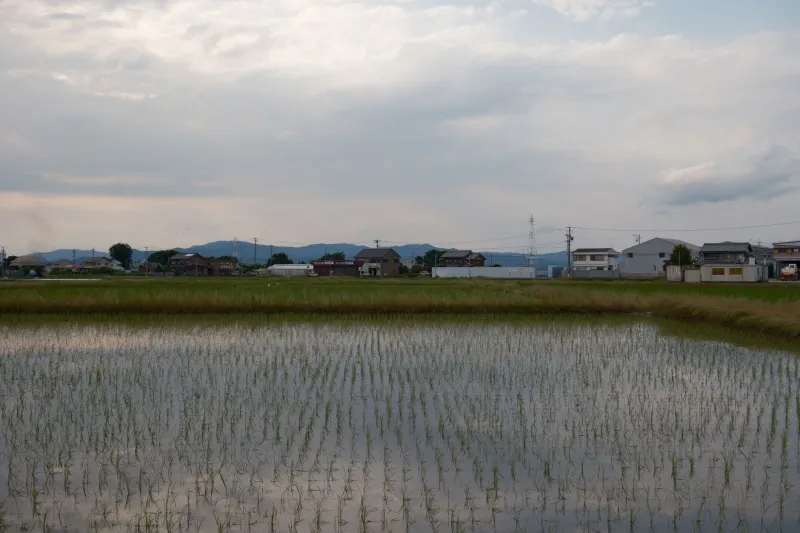
Outside his window, a field of golden rice is about three weeks from harvest. His next client call is in forty minutes. He's thinking about making lunch from scratch.
"Tokyo was a great idea," he says. "This is a great life."