Steel and Stillness: Why American Tech Nomads Are Finding Their Center at Kyushu's Ancient Sword Dojos
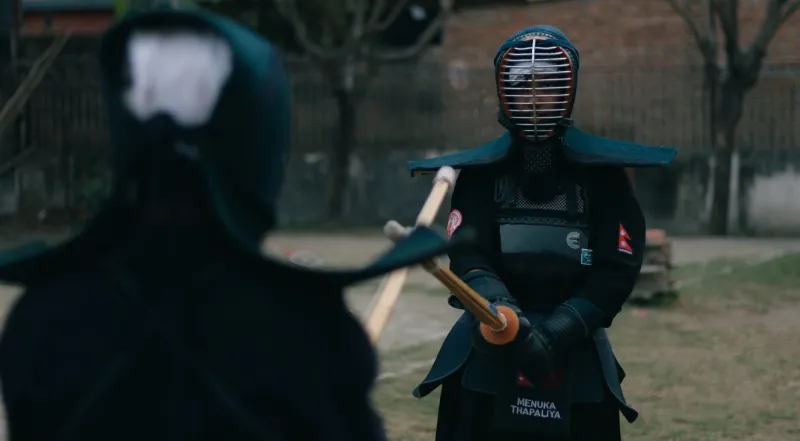
On a Tuesday evening in Kumamoto, a former product manager from San Francisco named Derek Hollis is standing barefoot on a polished wooden floor, sweat soaking through his gi, eyes locked on a target he cannot quite see. His bokken — a solid oak practice sword — cuts downward in a slow, deliberate arc. His instructor, a 67-year-old sensei named Watanabe Kenji, watches without expression. Then, almost imperceptibly, he shakes his head. They start again.
This is not what Derek imagined when he relocated to Kyushu eighteen months ago for what he called "a life reset." He came for the food, the low cost of living, and the time zone overlap with his remote engineering team back home. He stayed — and keeps staying — because of this. The sword. The silence. The relentless, humbling repetition.
"I thought I'd be here six months max," he says afterward, toweling off outside the dojo entrance. "Then I walked into this place and realized I hadn't been genuinely bad at something in years. That feeling — it kind of wrecked me. In a good way."
The Dojos That Never Left
Kyushu has always had a particular relationship with Japan's martial traditions. The island served as a crucial staging ground for samurai culture during the feudal era, and prefectures like Kagoshima — home of the Satsuma domain — produced some of history's most celebrated warrior clans. The region's dojos never disappeared, but for decades they operated quietly, serving local communities with little fanfare and almost zero international visibility.
That's changing. Instructors across Fukuoka, Kumamoto, Kagoshima, and Saga are reporting a measurable uptick in foreign students, and a disproportionate number of them are Americans working in tech — either fully remote employees who've decamped to Japan or freelancers chasing a slower, more intentional lifestyle. Kyushu, with its affordable cities, excellent infrastructure, and relative calm compared to Tokyo, has become a magnet for this crowd. And the dojos, it turns out, are waiting for them.
Sensei Watanabe has been teaching kendo and iaido for over four decades. He started accepting foreign students reluctantly about three years ago, mostly because a colleague in Fukuoka convinced him there was genuine interest. Now he has eight non-Japanese students, five of them American, and he's not sure he'd go back.
"Their hunger is different," he says through a translator. "Japanese students often come because of family tradition or school requirements. These foreign students — they come because something is missing. That kind of student listens very carefully."
Bushido as Bandwidth Detox
It might sound like a stretch — ancient warrior philosophy as a cure for tech burnout — but the practitioners themselves make a surprisingly coherent case for it. Kendo, the modern martial art of Japanese fencing, demands total presence. You cannot check your phone during a sparring match. You cannot multitask your way through the precise, meditative movements of iaido, which involves drawing, cutting, and resheathing a sword in choreographed sequences that take years to master. The practices are, by design, incompatible with the fractured attention economy most of these expats have spent their careers feeding.
Amanda Torres, a UX designer from Austin who moved to Fukuoka two years ago, describes her first few weeks at her local dojo as genuinely uncomfortable. "I kept wanting to optimize," she laughs. "Like, can I watch a YouTube tutorial? Can I get a faster feedback loop? And the answer was just — no. You do this the same way it's been done for five hundred years. That was either going to break me or fix me."
It fixed her, she says. She now trains four mornings a week before her remote work hours begin, and she credits the practice with a level of focus and emotional regulation she hadn't experienced since before the pandemic scrambled her sense of routine.
The philosophy embedded in these arts — discipline, respect, the acceptance of imperfection as part of the path — maps onto something a lot of these practitioners say they'd lost touch with in professional environments that reward speed and punish failure. Bushido doesn't promise you'll be great quickly. It promises that showing up, consistently and humbly, is the whole point.
What the Instructors Are Learning Too
The relationship isn't entirely one-directional. Several sensei interviewed for this piece described a genuine cultural exchange taking shape inside their dojos, one they hadn't anticipated. Foreign students bring questions — sometimes frustratingly basic ones, sometimes unexpectedly profound — that force instructors to articulate things they'd spent decades simply doing.
"One student asked me why we bow to the sword before we begin," recalls Harada Mitsuko, who teaches iaido in Saga City and has been practicing since she was eleven. "I had never been asked that directly. I had to think. And explaining it — in simple words, across a language barrier — made me understand it more deeply myself."
That kind of cross-cultural friction, the productive kind, is generating something interesting in Kyushu's martial arts community. A handful of dojos have begun offering structured programs for foreign residents, complete with English-language materials and monthly cultural workshops that place the sword arts in historical context. It's not commercialization exactly — the fees remain modest, the atmosphere remains serious — but it is an acknowledgment that the tradition has something to offer beyond its original cultural borders.
Finding the Floor Beneath the Hustle
What keeps coming up in conversations with these American practitioners is a word you don't usually associate with martial arts training: grounding. Not in a vague wellness-influencer sense, but literally — bare feet on wooden floors, body weight distributed, breath controlled, the physical reality of the present moment made impossible to ignore.
Derek Hollis puts it plainly: "In tech, everything is abstract. You ship a feature, you see a number go up, you ship another feature. There's no texture to any of it. Here, I am holding a piece of wood, and an old man is telling me my grip is wrong, and I have to fix it with my actual hands. That's real. I forgot what real felt like."
Kyushu's dojos weren't looking to become sanctuaries for Silicon Valley refugees. But somewhere between the bamboo walls and the ritual silence, they've become exactly that — and the swords are just the beginning.