The Rust Belt Playbook, Flipped: How Kyushu Turned Its Weaknesses Into a Blueprint Tokyo Can't Ignore
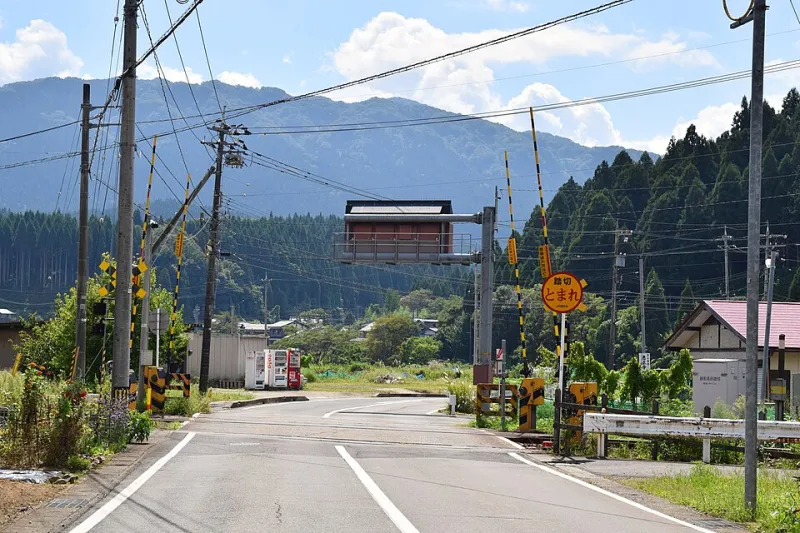
Photo: 雷太, CC BY 2.0, via Wikimedia Commons
There's a particular kind of condescension that flows from big cities toward the regions that feed them. Americans know it well — the coastal eye-roll at the Midwest, the breezy dismissal of anywhere that isn't New York or LA. Japan has its own version, and for decades, Kyushu has been on the receiving end of it. Too rural. Too old. Too far from the Shinkansen-connected corridors of power where Japan's future supposedly gets decided.
Except something quietly shifted. While Tokyo was busy being Tokyo — dense, expensive, relentlessly optimized for a version of modernity that increasingly exhausts the people living inside it — Kyushu was running a different kind of experiment. One born not from grand strategy, but from necessity. And the results are starting to turn heads in places as far away as Silicon Valley and Berlin.
When You Can't Grow, You Get Creative
Let's start with the demographic reality, because it's impossible to talk about Kyushu's story without it. The region has one of Japan's highest concentrations of elderly residents. Towns in Nagasaki, Oita, and Miyazaki prefectures have been watching their younger populations drift toward Fukuoka or Tokyo for years. On paper, that's a crisis. In practice, it became a forcing function.
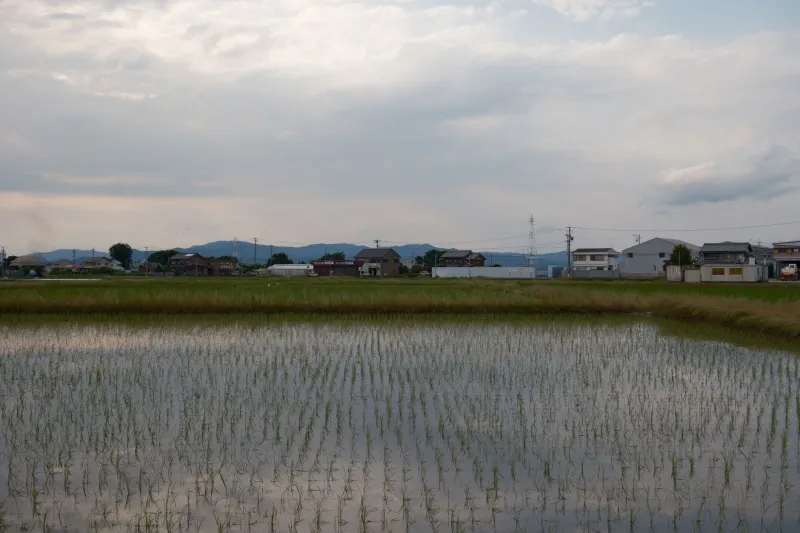
Take the network of satoyama farming cooperatives that have quietly expanded across Kumamoto and Oita prefectures over the past decade. Faced with farmland that had no young heirs to inherit it, local governments and community groups pioneered multi-generational land-sharing arrangements — essentially matching retired farmers with younger urban transplants who wanted to grow food but had no land, and no idea how to start. The elders didn't retire. They became the teachers. The young people didn't have to start from scratch. And the land kept producing.
It sounds almost too simple. But the model has been studied by urban planners from Osaka to Seoul, and a version of it is now being piloted in Tokyo's outer wards, where aging homeowners sit on underused garden plots while younger renters pay premium prices for apartments with zero outdoor space.
Zero Waste Before It Had a Name
Some of the most striking innovation in Kyushu isn't digital — it's deeply, stubbornly physical. The town of Kamikatsu in neighboring Shikoku gets most of the international press for its near-total waste separation system, but Kyushu's smaller municipalities have been running quieter versions of circular-economy infrastructure for years, driven by the same basic math: when your tax base is shrinking, you can't afford waste.
In parts of rural Kagoshima, agricultural byproducts that would be landfill in a larger economy have been systematically redirected — sweet potato skins into animal feed, shochu distillery lees into fertilizer, fishing industry scraps into the kind of high-protein supplements that health food brands in California would charge a premium for. Nobody called it a circular economy when they started doing it. They called it not throwing money away.
What's interesting to outside observers — and increasingly to Western investors doing due diligence on sustainability-focused ventures in Japan — is that these systems work because they're small. They're legible. You can trace the loop. In a mega-city, that kind of material accountability becomes nearly impossible to maintain at scale. Kyushu's constraint is, paradoxically, the thing that makes it a workable model.
The Quality-of-Life Arbitrage
Here's something that keeps coming up when you talk to the wave of remote workers, entrepreneurs, and small-batch manufacturers who've relocated to Kyushu from Tokyo or abroad over the past several years: they're not here because it's cheap, exactly. They're here because the ratio of what they pay to what they get is unlike anything they've experienced in a major city.
A craftsperson in Arita — home to one of Japan's most storied porcelain traditions — recently described her decision to leave a design job in Tokyo as less of a sacrifice and more of a rebalancing. Her studio rent is a fraction of what she paid for a shared workspace in Shibuya. She has a garden. She knows her neighbors. She collaborates with ceramic masters whose families have been working the same clay for four centuries. And she sells internationally through platforms that didn't exist ten years ago, which means geographic isolation is increasingly a psychological concept rather than a commercial one.
That story is playing out in dozens of variations across Kyushu — in the sake breweries of Saga that are attracting young brewers priced out of Kyoto's tradition-heavy scene, in the fishing villages of Nagasaki where young chefs are setting up omakase restaurants that get written up in food media from New York to London, in the music venues of Fukuoka where rents low enough to take creative risks have quietly built one of Japan's most interesting independent scenes.
Tokyo Is Watching
The irony isn't lost on anyone paying attention. For years, the assumption was that Tokyo's density and resources made it the natural laboratory for Japan's future. But density has costs. Resources attract competition that drives out experimentation. The city optimizes itself toward efficiency and ends up with less room for the kind of productive messiness where new things actually grow.
Kyushu, by contrast, has space. Physical space, yes — but also the institutional and social space that comes from not being the center of everything. Local governments here have been more willing to try unconventional approaches to elder care, urban farming, and small-business support, partly because the stakes of failure feel more manageable, and partly because the status quo wasn't working anyway.
Several of those approaches have now been formalized into policy pilots that Tokyo's metropolitan government is studying. The multi-generational land-sharing model. Decentralized composting infrastructure. Regional food identity programs that have stabilized local agriculture by turning hyperlocal ingredients into premium export products. None of this was invented in a think tank. It was figured out by people who needed to solve a problem before the next harvest season.
The View From Outside
For American entrepreneurs and investors looking at Japan, Kyushu has historically registered as an afterthought — a place you fly over on your way to Tokyo or Osaka. That's shifting. The region's combination of relatively affordable real estate, strong manufacturing heritage, deep food culture, and increasingly cosmopolitan cities (Fukuoka has been on international livability indexes for years) is starting to look less like a consolation prize and more like a strategic position.
The word that keeps coming up, in conversations with both locals and newcomers, is sustainable — not in the buzzword sense, but in the older, more literal one. Things here were built to last. The businesses that survived the postwar boom and the subsequent decades of economic turbulence did so by staying close to what they actually knew how to do, by not over-leveraging, by keeping their supply chains short enough to actually understand.
That's not a romantic story about the virtues of staying small. It's a practical one. And in a moment when a lot of people — in Japan and far beyond it — are questioning what growth is actually supposed to be for, Kyushu's unfashionable pragmatism is starting to look a lot like wisdom.