Clay and Conscience: Meet the Kyushu Potters Rewriting What Ancient Ceramics Can Look Like
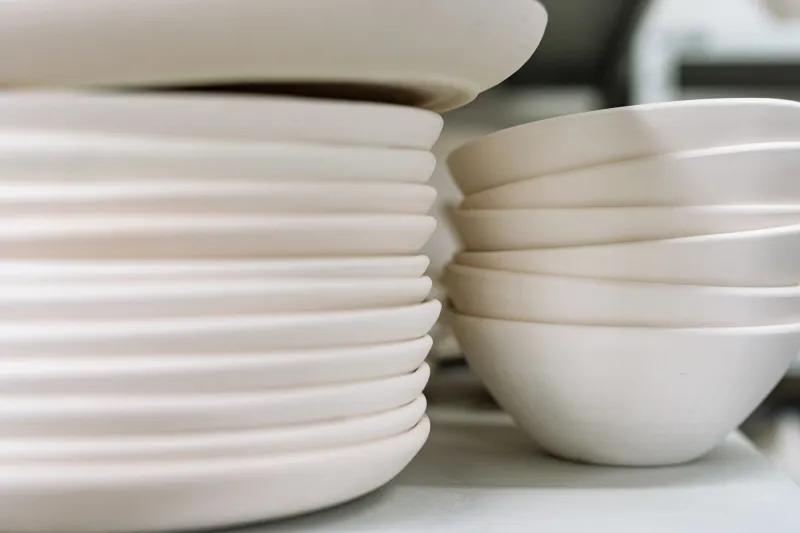
In the kiln towns of Saga Prefecture, something quietly radical is happening. The same soil that produced the porcelain that once stunned European royalty is now being shaped by a new generation of artists who have one foot in a 400-year-old tradition and the other planted firmly in a global design conversation that values restraint, sustainability, and the kind of beauty that doesn't shout.
Arita and Imari. If you're a serious ceramics person, those names carry weight. If you're not, here's the short version: these two small Kyushu towns essentially taught Europe what fine porcelain could be. In the 17th century, Dutch East India Company ships were hauling Arita ware to the courts of Versailles and Dresden. The intricate blue-and-white and polychrome patterns became so influential that European manufacturers spent decades trying to reverse-engineer the formula. They couldn't. Not really.
Fast forward to now, and the question facing Arita and Imari isn't whether the tradition is worth preserving — everyone agrees it is — but whether it can survive contact with the 21st century without losing what made it worth preserving in the first place.
A Studio Visit That Resets Your Expectations
Step into Keiko Mori's studio on the eastern edge of Arita and your first instinct might be to wonder if you've got the right address. There are no elaborate painted vases. No cobalt dragons. The shelves hold objects that look, at first glance, almost aggressively plain — small bowls in muted celadon, cups with walls thin enough to suggest fragility, plates where the entire decorative statement is the subtle variation in a single glaze.
Mori trained under a Living National Treasure ceramicist before spending three years working with a sustainable materials studio in Copenhagen. The combination shows.
"When I came back to Arita, people thought I had wasted my time in Denmark," she says, turning a just-thrown bowl in her hands. "They thought I would come home making Scandinavian furniture out of clay. But what I actually learned was how to listen to material. Arita clay has a voice. I just needed to stop talking over it."
Her work now sells through galleries in New York, Los Angeles, and London, with a waitlist that stretches several months for her most sought-after pieces. The price points — ranging from around $80 for a single cup to several thousand for larger statement pieces — position her work squarely in the premium craft market that American consumers have been increasingly drawn to as a reaction against disposable fast-home goods.
The Economics of Heritage, Honestly
It would be easy to romanticize all of this, and plenty of travel writing about Japanese ceramics does exactly that. But the economic reality facing Arita and Imari is genuinely complicated, and the artists working there are refreshingly direct about it.
At its peak in the late Edo period, Arita had hundreds of active kilns. Today, the number of working studios has contracted dramatically, and many of the remaining operations have shifted toward souvenir-grade production to capture tourist spending. The gap between that category and the serious craft market is wide, and crossing it requires capital, connections, and a willingness to court international buyers in ways that older generations of ceramicists often found distasteful.
"My grandfather thought selling abroad was almost a betrayal," admits Ryo Nakashima, who runs a small kiln in Imari with his wife. "He believed Imari ware belonged in Japanese homes, used by Japanese people. I respect that. But there are no young Japanese people lining up to buy traditional Imari plates for their apartments. The market is overseas, and pretending otherwise is how kilns close."
Nakashima has leaned into that reality with clear eyes. He's built a direct-to-consumer online presence, ships internationally, and has developed a line of pieces specifically sized for the American tableware market — slightly larger than traditional Japanese serving pieces, designed to work with Western-style dining. It's a pragmatic adaptation that some purists find uncomfortable, but his kiln is operating, and his apprentice program has two young ceramicists in it.
Sustainability as Both Practice and Marketing
One area where contemporary Kyushu ceramicists are finding genuine alignment between tradition and modern demand is sustainability. The old kiln methods — wood-fired, using locally sourced clay and natural ash glazes — were sustainable before that was a selling point. Several studios are now leaning into that heritage explicitly, both as a production philosophy and as a story to tell buyers who care about where things come from.
Mori sources all her clay from within Saga Prefecture and fires with a combination of wood and rice husks, a traditional method that produces subtle surface variations impossible to replicate in an electric kiln. She documents the process extensively on social media, and the behind-the-scenes content — the physical labor of the wood firing, the genuine uncertainty about how each piece will emerge — has built her an audience that's as invested in the process as the product.
"Americans especially respond to the wood firing," she observes. "There's something about knowing a piece survived a fire, that it was changed by something unpredictable, that makes it feel alive to them. They don't want perfect. They want real."
What the Next Generation Is Actually Making
The most interesting work coming out of Kyushu's pottery towns right now sits at the intersection of traditional technique and contemporary function. Younger ceramicists are making pour-over coffee drippers in Arita porcelain. Matcha bowls designed with a flat base that works on a Western countertop. Sake cups that double as espresso vessels. The aesthetic is unmistakably rooted in Japanese craft sensibility — the appreciation for irregularity, for the beauty of the unforced — but the objects fit into daily life in Brooklyn or Portland or Austin without requiring a lifestyle overhaul to use them.
This is, arguably, exactly what the Arita masters of the 17th century were doing when they adapted their forms to suit Dutch export tastes. The tradition has always been in conversation with the outside world. The current generation is just having that conversation faster, and with better Wi-Fi.
For anyone planning a trip to Kyushu, the pottery towns of Saga deserve more than a half-day detour. Arita in particular has a ceramics museum that contextualizes the full sweep of the tradition, and several studios offer hands-on workshops that will leave you with a genuine appreciation for how much skill goes into objects that look, from a distance, like they might be simple.
They are not simple. They are just confident enough not to prove it.