These Kyushu Grandmas Went Viral for Picking Weeds — Now the Whole World Is Watching
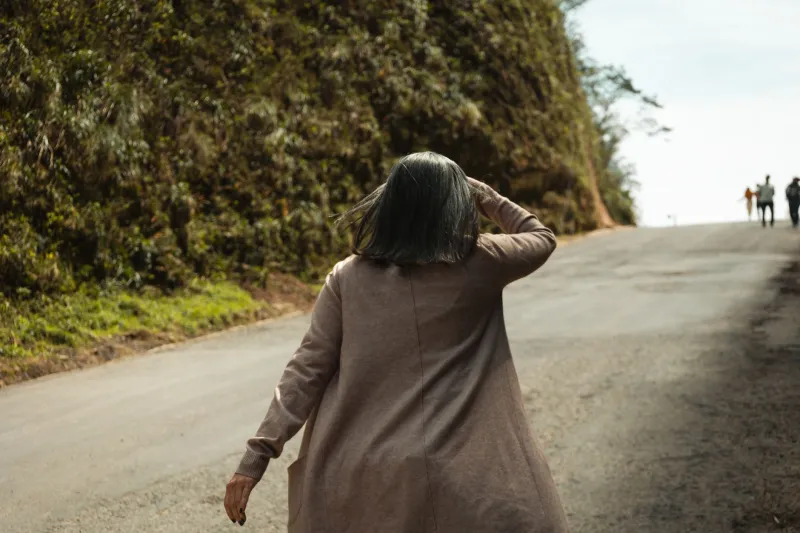
Hiroko Tanaka is 74 years old, walks with a slight lean to the left, and has never once used a ring light. Her granddaughter started filming her on a smartphone two years ago mostly as a joke — grandma shuffling through the cedar forest behind their house in Oita Prefecture, narrating to no one in particular about which fiddlehead ferns were worth taking home and which ones would give you a stomachache. The first video got 40,000 views in a week. The latest one cleared two million.
She is not alone.
Across Kyushu's mountain towns and coastal hillsides, a loose, entirely uncoordinated movement of elderly women has quietly become one of the internet's most unexpected obsessions. They're foragers — lifelong practitioners of a skill passed down through necessity rather than trend — and they've been doing this their whole lives. The cameras just showed up recently.
What They're Actually Doing Out There
Let's be clear: this isn't the aesthetic, linen-apron, wicker-basket version of foraging that went mildly viral on Pinterest a few years back. These women are working. They move through terrain with the efficiency of people who grew up before supermarkets were the default, identifying plants by the shape of a leaf edge or the way a stem breaks. They know which bamboo shoots appear after which kind of rain. They remember which hillside patches their own grandmothers used and whether those patches have shifted over the decades.
The content itself is deceptively simple. A woman crouches near a creek and pulls up what looks like a weed. She holds it up, says its name in Japanese dialect, explains how she'll prepare it for dinner. Sometimes there's a daughter or granddaughter behind the camera asking questions. Sometimes it's just the ambient sound of wind and birds and the occasional grunt of effort.
And people cannot stop watching.
The Comment Sections Are a Whole Thing
If you've never scrolled through the comments on one of these videos, you're missing a genuinely moving cross-cultural moment. There are viewers from the Pacific Northwest trying to cross-reference local plants. There are people in Germany asking if the mushroom she just found has an equivalent in Bavarian forests. There are foragers in Appalachia drawing direct parallels to their own grandmothers' knowledge, much of which was similarly undocumented and nearly lost.
One comment that got thousands of likes on a video from an 80-year-old woman in Kagoshima Prefecture simply read: "My grandmother knew all of this too and I never asked her to teach me before she passed. I'm crying in a Walmart parking lot."
That's the thing about this content — it hits a specific grief that a lot of people in the US are carrying around without a name for it. The grief of inherited knowledge that got dropped somewhere between generations. The feeling that the practical, embodied intelligence of our elders got treated as quaint and unnecessary right up until the moment it was gone.
These Kyushu grandmothers didn't set out to be a balm for that. They just went outside.
The Knowledge Is the Point
Ethnobotanists — researchers who study the relationship between human cultures and plants — have been paying close attention. Dr. Mika Yoshida, a researcher affiliated with a university in Fukuoka, has started cataloguing the species mentioned across dozens of these channels. Her preliminary work suggests that collectively, these videos represent an informal but substantial archive of traditional ecological knowledge specific to Kyushu's varied microclimates.
"Some of what these women know is genuinely not written down anywhere," she said in a recent interview with a Fukuoka-based media outlet. "The specific preparation methods, the seasonal timing, the oral names that differ village by village — that's living knowledge. And it's being preserved in a format that might actually reach the people who need it."
That's a wild sentence to sit with. TikTok, of all places, as a vessel for irreplaceable ecological memory.
Generational Weirdness, in the Best Way
The family dynamics behind these channels are often just as compelling as the content itself. In many cases, it's a younger family member — a granddaughter in her twenties, a nephew who studied media in Fukuoka — who convinced grandma to let them film in the first place. The elder women are frequently baffled by the response.
One woman in her late seventies from a town near Aso volcano reportedly asked her granddaughter to explain why strangers in America were sending her messages. When it was explained that people thought she was teaching them something valuable, she apparently laughed for a long time and said something along the lines of: *"This is just what you do in the mountains."
That gap — between "this is just what you do" and "this is something the world urgently wants" — is exactly where the emotional power of this whole phenomenon lives.
For younger Japanese viewers, especially those who left rural Kyushu for cities like Fukuoka, Tokyo, or Osaka, the videos function almost like a reconnection ritual. For American viewers, they seem to trigger something more wistful — a longing for the kind of rooted, place-specific knowledge that industrialization and suburban sprawl made increasingly rare.
Is It a Movement?
Some people are calling it that, though the grandmothers themselves would probably find the label ridiculous. There's no organization, no shared hashtag that unifies them, no brand deal ecosystem (yet — though it's probably coming). It's just a collection of older women doing what they've always done, captured by relatives who thought it might be interesting.
What's emerged organically is something more valuable than a movement, maybe. It's a reminder that expertise doesn't always announce itself. That the most important knowledge in a community is sometimes held by the person who's been quietly walking the same hillside for sixty years without ever being asked to explain what she knows.
Some viewers have started their own foraging practices after watching, linking back to the channels that inspired them. Others have reconnected with older relatives in their own families, asking questions they'd never thought to ask. A few have even booked trips to Kyushu specifically to walk forests they'd seen in the videos — which, honestly, is the kind of tourism that doesn't get nearly enough credit.
Go Find the Videos
If you haven't already fallen down this particular rabbit hole, consider this your invitation. Search for foraging content from rural Japan and let the algorithm do the rest. You'll probably end up watching a woman in her eighties demonstrate the correct way to harvest sansai greens on a misty Kyushu morning, and you will feel something you didn't expect to feel on a Tuesday.
Bring a snack. You'll be there a while.