Less Is More, and Kyushu Is Proving It: The Designers Turning Restraint Into a Global Statement
Walk through the shopping arcades of Tenjin on a Saturday afternoon and you'll still find plenty of flash. Neon-edged sneakers, logo-heavy streetwear, the kind of loud visual energy that makes Tokyo feel like a warm-up act. But step a few blocks off the main drag — into the converted machiya townhouses and unmarked studio spaces that have become Fukuoka's unofficial design district — and something completely different is happening.
Quiet. Deliberate. Almost stubbornly understated.
Kyushu's emerging design scene isn't trying to compete with the maximalism that dominates Japanese fashion discourse. It's doing the opposite, and somehow that's making more noise.
The Counterintuitive Move
Japan has never exactly been shy about ornamentation. From the gold-leaf excess of Momoyama-era lacquerware to the layered chaos of Harajuku street style, the cultural appetite for visual richness runs deep. So when a cluster of Kyushu designers started moving in the opposite direction — fewer colors, simpler silhouettes, materials chosen for how they age rather than how they dazzle on a rack — people noticed.
Yuki Hamasaki, a Fukuoka-based textile and apparel designer who spent a decade in Osaka before returning to her home prefecture, puts it plainly: "I got tired of making things that screamed. Kyushu has this older sensibility — the pottery, the lacquerware, even the food. There's a confidence in simplicity here that I didn't feel I was allowed to express anywhere else."
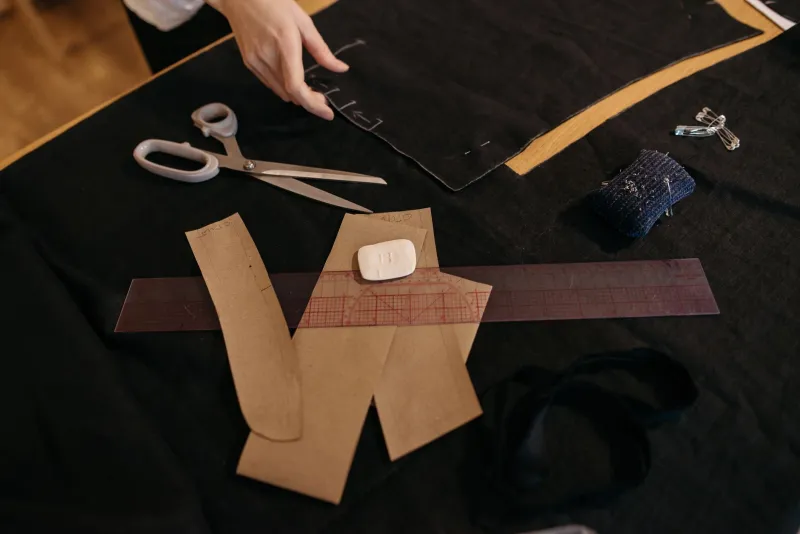
Hamasaki's label, which she runs out of a converted warehouse in Hakata, produces maybe four collections a year. Each piece is made in small runs, often using undyed linen sourced from domestic producers, with construction details — a hidden seam, a subtly weighted hem — that only reveal themselves up close. Her pieces have shown up in editorial spreads in Paris and on the backs of a handful of well-known figures in the American art world. She doesn't advertise. She barely has a social media presence.
That's kind of the point.
Rooted in Something Older
What makes this movement feel distinct from, say, Scandinavian minimalism or the kind of quiet luxury that's been trending on American fashion TikTok, is that it isn't purely aesthetic. These designers are pulling from something with centuries of weight behind it.
Kyushu has long been a crucible for Japanese craft. Arita porcelain. Kurume kasuri indigo weaving. Yame lacquerware. These aren't just tourist talking points — they represent a design philosophy that prizes function, material honesty, and the kind of beauty that deepens with use rather than fading with trends.
Kosuke Nishida, who runs a small accessories label out of Saga Prefecture, studied traditional urushi lacquer techniques before pivoting to leather goods. His bags and cardholders carry almost no visible branding, but the construction — hand-stitched, edge-painted, built to last decades — is unmistakable to anyone who knows what they're looking at. "In urushi work, you spend weeks on a base that nobody will ever see," he says. "That discipline changes how you think about everything you make."
That invisible foundation — the craft logic underneath the surface restraint — is what separates this from mere aesthetic posturing. These pieces aren't minimal because the designer ran out of ideas. They're minimal because every decision was made with intention.
Why Western Consumers Are Responding
There's a certain exhaustion setting in on the American side of the luxury market. Logomania had its moment, then its backlash, then its comeback, and somewhere in that cycle a lot of consumers started looking for something that felt more durable — not just physically, but culturally. Something that didn't depend on a recognizable monogram to justify its price tag.
Kyushu's design output lands squarely in that gap. The pieces feel considered rather than branded. The materials have provenance. The backstories are real — a weaver in Kurume who learned from her grandmother, a ceramicist who apprenticed for seven years before producing anything sellable.
American boutiques in cities like Portland, Brooklyn, and Los Angeles have started picking up a handful of these labels, often through personal connections rather than formal distribution deals. The response, by most accounts, has been quietly enthusiastic — the kind of customer who finds one of these pieces tends to come back.
"There's a customer who's done with logos," says one buyer at a Portland concept store who asked not to be named. "They want something that feels earned. When you can explain the craft process behind a bag or a jacket, that's the story they want to tell."
The Designers to Watch
Beyond Hamasaki and Nishida, a loose constellation of makers is expanding what this movement looks like.
In Nagasaki, a duo working under a shared studio name produces ceramics and home objects that borrow heavily from the city's layered history — Portuguese, Dutch, Chinese, and Japanese influences compressed into objects that feel both ancient and contemporary. Their tea sets have a waiting list.
In Kumamoto, a former graphic designer turned furniture maker is producing small-batch wooden pieces using timber salvaged from buildings damaged in the 2016 earthquake — objects that carry literal history in their grain. He's had inquiries from design galleries in New York and Copenhagen.
And in Oita, a textile artist working primarily with traditional bingata-adjacent resist-dyeing techniques has stripped the method down to its structural bones, producing fabrics in near-monochromatic palettes that feel almost architectural.
None of these people are household names. Most of them seem fine with that.
The Tension Worth Naming
It would be dishonest to romanticize all of this without acknowledging the friction. Some critics within Japan's design community argue that the "quiet luxury" framing is partly a Western projection — that these makers are being read through a lens that flattens their actual intentions. There's a real risk that the global appetite for "authentic Japanese craft" ends up extracting the cultural content while leaving the community behind.
The best of these designers seem aware of that tension. Hamasaki is deliberate about keeping her production in Kyushu, working with local suppliers even when cheaper options exist. Nishida teaches urushi workshops in Saga, partly because he doesn't want the knowledge chain to break on his watch.
The restraint, in other words, extends beyond the objects themselves. It's in how these makers are choosing to grow — slowly, carefully, without outsourcing their soul to meet international demand.
Kyushu Was Always Doing This
Here's the thing that gets lost in the trend coverage: Kyushu didn't suddenly discover minimalism. The region has been producing objects of extraordinary restraint for centuries. What's new is that the people making them have found a language — and an audience — that lets that sensibility travel.
If you're the kind of person who's tired of being sold to, who wants the thing behind the thing, Kyushu's designers are worth your attention. They're not making noise about it. But that's sort of the whole point.