Fukuoka or Bust: Why Japan's Smartest Tech Founders Are Skipping Tokyo and San Francisco Entirely
There's a version of the startup story everyone knows. You move to San Francisco or Tokyo, you rent a desk in a co-working space the size of a walk-in closet, you pitch to investors who've heard it all before, and you grind until something breaks — usually you. That story is getting old. And in Kyushu, a different one is being written.
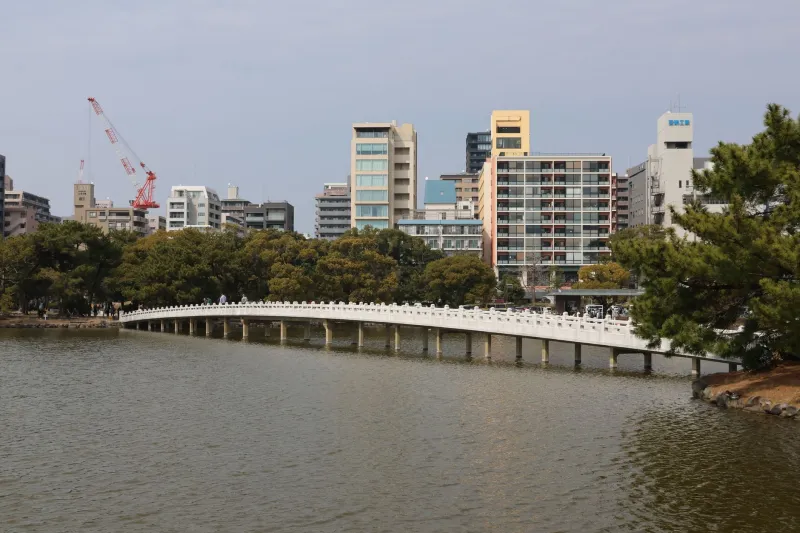
Fukuoka, the largest city in Kyushu and the one most Americans couldn't place on a map until recently, has been quietly assembling a tech ecosystem that's drawing serious attention — not just from within Japan, but from founders and investors who've done time in the big leagues and decided they'd had enough.
The Cost Argument Is Real, But It's Not the Whole Story
Let's start with the obvious. Office space in Fukuoka runs roughly one-third the cost of comparable space in Tokyo's central wards. Rent for a two-bedroom apartment in a walkable neighborhood? You're looking at maybe $800 to $1,200 a month. In San Francisco, that number gets you a parking spot if you're lucky.
But ask the founders who've made the move, and most of them will wave off the cost thing pretty quickly. "Everyone leads with the rent," says Keisuke Yamamoto, who co-founded a B2B SaaS company focused on supply chain visibility after stints in both Tokyo and the Bay Area. "But the real reason I'm here is that I can actually talk to the people I need to talk to. In San Francisco, everyone's pitching everyone. Here, people actually want to solve problems."
That cultural texture matters more than most outsiders realize. Fukuoka has a reputation — earned, by most accounts — for being unusually collaborative for a Japanese city. The startup community is small enough that founders run into each other at ramen counters and izakayas, not just at formal networking events. Information flows differently. Favors get returned.
The Manufacturing Proximity Play
Here's something the Silicon Valley playbook doesn't account for: Kyushu is one of Asia's most important manufacturing corridors. The region hosts major semiconductor fabrication plants, automotive suppliers, and precision hardware manufacturers. For hardware-adjacent startups and companies that need to move between digital and physical product development, that proximity is genuinely valuable.
Mizuho Tanaka left a product management role at a Tokyo tech company to start a firm building IoT sensors for agricultural applications. She chose Saga Prefecture — not Fukuoka, not Tokyo — because her customers are farmers and her supply chain runs through Kyushu's electronics manufacturing base. "In Tokyo, I would have been building for investors," she says. "Here I'm building for people who actually use the thing."
That grounded relationship with actual end users keeps coming up in these conversations. Kyushu's economy is diverse — agriculture, manufacturing, tourism, logistics — and that diversity creates a testing ground for products that have to work in the real world, not just in a demo environment.
What Fukuoka's Government Actually Got Right
In 2012, Fukuoka City launched a startup visa program — the first of its kind in Japan — allowing foreign entrepreneurs to establish a business while still in the process of meeting residency requirements. It was a small policy change with a disproportionate signal effect. It said, plainly, that Fukuoka was open in a way that most Japanese cities weren't.
Since then, the city has added subsidized co-working spaces, English-language business support services, and a dedicated startup cafe in the city center that functions as an informal hub. None of it is flashy. All of it works.
The national government eventually caught on, designating Fukuoka as a "Global Startup City" — a status that comes with regulatory flexibility and additional funding pipelines. But locals will tell you the energy was already there before the designation arrived.
The Talent Pipeline Nobody's Talking About
Kyushu University, Kyushu Institute of Technology, and several other strong regional universities produce a steady stream of engineering and business graduates who, historically, got on the bullet train to Tokyo the moment they had a diploma in hand. That pattern is shifting.
Partly it's economics — the cost of living in Tokyo has made the math harder for young graduates carrying student debt. Partly it's a cultural reorientation that's visible across Kyushu, a growing sense that building something meaningful in your home region is a legitimate ambition, not a consolation prize.
For tech companies based in Fukuoka, this creates a hiring environment that's competitive but not brutal. "In Tokyo, you're fighting every other company in Japan for the same candidates," says one founder who asked not to be named. "Here, if you're a good place to work and you treat people well, word gets around fast. We haven't had a recruiting problem in three years."
Not a Utopia, But Maybe Something Better
It would be dishonest to pretend Fukuoka's tech scene doesn't have limitations. The investor network, while growing, is thinner than Tokyo's. Companies that need large Series B or C rounds often find themselves making the trip east eventually. International connectivity, while better than it used to be, still requires more planning than it does from Tokyo's Narita or Haneda.
And for all the collaborative energy, the scene is still relatively small. If you have a falling-out with the wrong person, you'll feel it.
But the founders who've chosen Fukuoka aren't looking for perfection. They're looking for a place where the work is the point, where the city doesn't eat your margins before you've had a chance to build anything, and where the people around you are solving real problems for real humans.
That's a reasonable thing to want. And right now, Fukuoka is one of the few places in the world actually delivering it.