The Numbers Don't Lie: Kyushu Is Winning the Life Race While Tokyo Burns Out
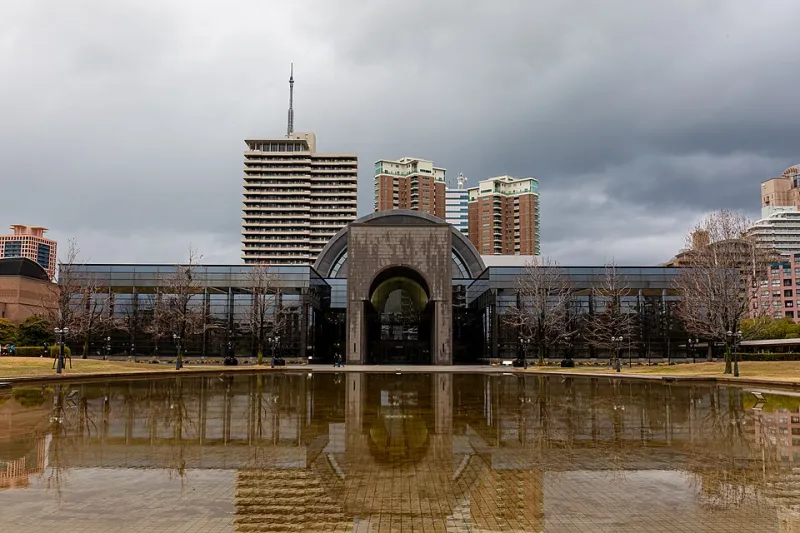
Photo: Balon Greyjoy, CC0, via Wikimedia Commons
There's a version of Japan that most Americans know. It's the one with the neon-lit crosswalks, the bullet trains running to the second, the salarymen in matching suits asleep standing up on the subway at midnight. That Japan is real. It's just not the whole story.
Because somewhere on the southwestern end of the Japanese archipelago, a region of 13 million people has been quietly doing things differently — and the data is starting to catch up to what the locals have known for decades.
Kyushu isn't supposed to win this argument. It's not where the headquarters are. It's not where the prestige jobs live. For most of the postwar era, it was the place ambitious young Japanese left — heading north to Tokyo or Osaka to chase the version of success Japan's economic miracle had promised them. Kyushu was the hometown you came back to for New Year's, not the place you built your life.
But something shifted. And the metrics are telling a story that the national narrative hasn't caught up to yet.
What the Data Actually Shows
Let's talk numbers, because this isn't just vibes.
Fukuoka City — Kyushu's largest urban center and one of Japan's fastest-growing cities — consistently ranks among the top three Japanese cities for livability in domestic surveys. In the 2023 Mori Memorial Foundation's Global Power City Index, Fukuoka punched well above its weight class in categories like environment and accessibility. More telling, though, are the surveys that track what people feel about their daily lives.
A Cabinet Office survey on well-being released in 2022 placed multiple Kyushu prefectures — including Kumamoto, Kagoshima, and Oita — in the upper tier for life satisfaction scores. Meanwhile, Tokyo ranked notably lower on subjective happiness despite dominating every economic output metric in the country. The gap between what Tokyo produces and how happy its residents actually are is one of the most quietly damning statistics in modern Japanese public policy.
On cost of living, the contrast gets sharper. The average monthly rent for a one-bedroom apartment in central Tokyo hovers around ¥120,000–¥150,000. In Fukuoka, you're looking at roughly half that for comparable space. In smaller Kyushu cities like Nagasaki or Miyazaki, it drops further still. For Americans used to the San Francisco or New York calculus — where a massive chunk of your salary evaporates before you've bought a single grocery — this math is immediately legible.
The Burnout Gap
Here's where it gets genuinely interesting.
Japan's relationship with overwork is well-documented internationally. The word karoshi — death from overwork — entered the global vocabulary for a reason. But that phenomenon is not evenly distributed across Japan. It clusters. And it clusters hardest in the places where the economic pressure is most intense, which is to say: Tokyo.
Kyushu's labor culture has historically operated on a different rhythm. Part of this is structural — fewer industries demanding 80-hour weeks, a stronger culture of returning home for dinner, regional norms that treat visible overwork less as a badge of honor and more as a personal failing. A survey by the Japan Productivity Center found that workers in Kyushu prefectures reported significantly higher work-life balance satisfaction than their counterparts in the Kanto region, even when controlling for income.
This isn't a poverty story. It's not that Kyushu workers are satisfied because they've given up on ambition. It's that the definition of a good life looks different here, and increasingly, that definition is looking more sustainable than the one Tokyo has been selling.
Community as Infrastructure
One metric that rarely shows up in economic analyses but matters enormously to actual human beings: how connected do you feel to the people around you?
Kyushu scores unusually high on what researchers call "social cohesion" — the degree to which people trust their neighbors, participate in local events, and feel embedded in a community. Some of this is demographic (smaller cities naturally foster familiarity), but some of it is cultural. The machizukuri tradition — loosely translated as community-building — is taken seriously here in ways that have eroded in Tokyo's transient apartment culture.
For Americans who grew up in suburbs where you might not know the name of the person living ten feet away, this registers as something quietly radical. People in Oita's hot spring towns know their neighbors. People in Saga's farming communities show up for each other during harvest. In Kumamoto, the 2016 earthquake didn't just reveal destruction — it revealed an astonishing network of mutual aid that had been there all along, largely invisible until it was needed.
The Protection Hypothesis
So here's the question worth sitting with: did being overlooked actually protect Kyushu?
There's a compelling argument that the region's decades-long status as Japan's economic afterthought insulated it from the worst effects of hypercapitalist development. Tokyo's economic dominance came with costs — astronomical housing prices, environmental degradation, social atomization, a work culture that treats human beings as productivity units. Kyushu, largely passed over by the forces that shaped that world, retained things that are genuinely hard to rebuild once they're gone.
The irony is thick. The region that Tokyo's elite dismissed as a backwater may have accidentally preserved the conditions for a livable human life precisely because nobody was paying close enough attention to optimize it into oblivion.
This is a pattern Americans should recognize. Think about the mid-sized Midwest cities that got written off during the 90s tech boom — places like Boise, Asheville, or Chattanooga — that are now being rediscovered by people fleeing the coasts. The logic is similar. Neglect, in the right doses, can function as preservation.
The Catch
None of this means Kyushu is paradise. The region faces real challenges: an aging population, rural depopulation, and the slow bleed of young talent to Tokyo that has been happening for sixty years. Infrastructure in some areas lags. Economic opportunity, while growing, is still narrower than in Japan's major metros.
And there's a real risk that the same forces now "discovering" Kyushu — the remote workers, the digital nomads, the lifestyle migrants — could, if they arrive in sufficient numbers, begin to erode the very qualities that made the region worth discovering in the first place. It's a tension that Fukuoka's city planners are actively wrestling with.
What It Actually Means
But here's the bottom line, stated plainly: by almost every measure that relates to how human beings actually experience their days — sleep, stress, community, cost, mental health, time with family — Kyushu outperforms Japan's headline cities. Consistently. Measurably. Year after year.
The region isn't winning the GDP race. It's winning a different race. One that a lot of people, in Japan and abroad, are only now realizing was the one worth running all along.
Maybe the backwater had it figured out before the rest of us caught on.