Underdog Nation: How Being Left Behind Turned Kyushu Into Japan's Weirdest, Wildest Idea Lab
There's a particular kind of freedom that comes from being ignored. Ask anyone who grew up in a small town, or started a band in a city where nobody cared, or built a business in a market that the big players hadn't bothered to colonize yet. Kyushu knows this feeling intimately.
For decades, Japan's southernmost major island has watched talent, capital, and attention flow northeast toward Tokyo like water finding a drain. The bullet train made the exodus faster. Globalization made it more total. And yet — somehow, stubbornly, almost despite itself — Kyushu has emerged as the place where Japan's most interesting experiments are actually happening.
Call it the underdog advantage. Call it necessity mothering invention. Whatever you call it, the results are hard to argue with.
The Lab Nobody Asked For
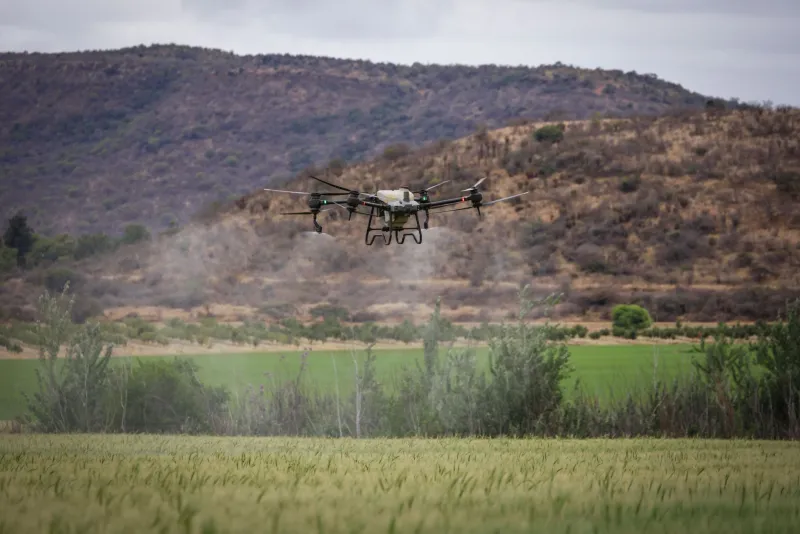
When agricultural tech startup Sagri set up operations in rural Saga Prefecture, they weren't chasing a trend. They were solving a problem that Tokyo had largely stopped thinking about: how do you keep food growing when the people who know how to grow it are dying faster than they can be replaced?
Sagri's answer involved satellite imaging, soil analysis algorithms, and a platform that lets a single farmer manage fields that would have required three generations of family labor a decade ago. It's not glamorous. It doesn't have a slick consumer app. But it works — and it's already being licensed to agricultural operations in Southeast Asia.
This is the pattern you see again and again across Kyushu. The problems here are real, urgent, and largely ignored by the innovation economy. So the people dealing with them build solutions that actually function rather than solutions that demo well at a conference.
"In Tokyo, you build for the pitch deck," says one Fukuoka-based entrepreneur who asked not to be named. "Here, you build for the farmer who's sixty-eight years old and needs to figure out if his north field has enough nitrogen before the rain comes Thursday."
Tourism That Doesn't Hate Itself
If AI agriculture represents Kyushu's pragmatic side, its evolving tourism economy shows something more philosophical — a genuine rethinking of what it means to welcome strangers.
The old model, familiar from Kyoto to Cancun, treats visitors as revenue units to be processed efficiently. Kyushu's emerging alternative looks more like matchmaking. Beppu, the volcanic hot spring city that sits on more geothermal activity than almost anywhere on Earth, has spent years building what locals call "slow tourism" infrastructure: extended-stay programs, craft apprenticeships, cooking residencies that run for weeks rather than hours.
The numbers aren't as immediately impressive as a packed theme park. But the economic ripple is longer-lasting, and the cultural erosion that comes with mass tourism moves slower.
Nagasaki has taken a different angle, leaning into its genuinely complicated history — Portuguese trade, Dutch isolation, atomic devastation — as a framework for tourism that asks visitors to actually think. It's not comfortable. It's not supposed to be. And international visitors, particularly younger Americans who grew up on immersive museum experiences, have responded in ways that surprised even the tourism board.
The Homogenization Problem
Here's where the story gets complicated, because Kyushu's underdog advantage is, by definition, self-limiting.
The same isolation that created space for experimentation is precisely what those experiments are designed to overcome. Successful AI agriculture platforms attract investment. Investment attracts attention. Attention attracts the same forces — standardization, scalability pressure, the relentless optimization of anything that works — that turned Tokyo's neighborhoods into interchangeable commercial districts.
Fukuoka has already felt this pressure. The city's startup ecosystem, once celebrated for its scrappy, community-first culture, has spent the last five years negotiating with venture capital firms whose idea of success looks a lot like San Francisco circa 2015. Some founders have thrived in that environment. Others have watched the thing they built get sanded down into something fundable and, in the process, something forgettable.
"The danger isn't failure," says one designer who relocated from Osaka to Fukuoka specifically to escape the mainstream creative economy. "The danger is succeeding in the wrong way."
What Makes It Stick
The regions of Kyushu that seem most resilient to homogenization share a few characteristics. They tend to be places where the innovation is deeply entangled with local identity — where the thing being built couldn't exist anywhere else because it's responding to conditions that are specific to this soil, this coastline, this particular way of organizing community.
Kumamoto's ceramics revival, which has drawn international attention and serious collector money, works because it's rooted in techniques and materials that are literally extracted from Kumamoto's earth. You can't offshore that. You can't franchise it. The place is the product.
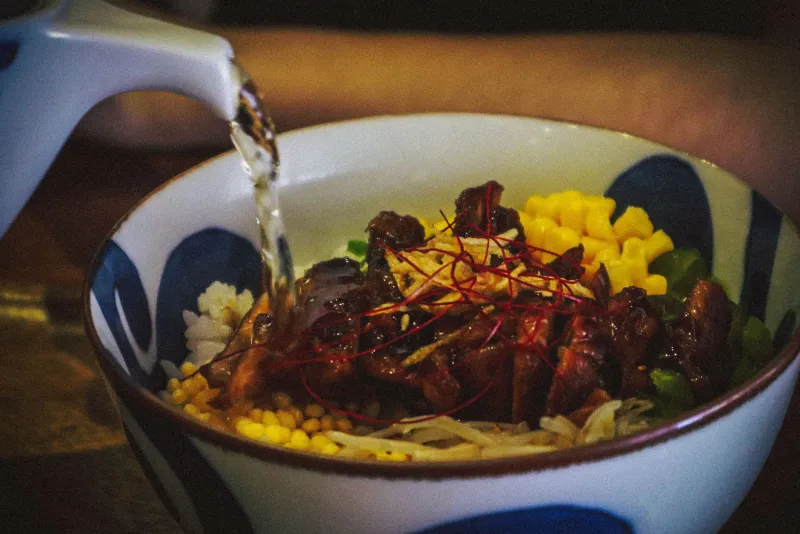
The same logic applies to Kagoshima's shochu producers, who have spent the last decade building export markets not by making their product more accessible but by making it more itself — leaning harder into regional grain varieties, traditional fermentation methods, flavor profiles that would never survive a focus group.
This is Kyushu's best defense against the forces that flatten everything interesting: not walls or regulations, but depth. The deeper the roots, the harder the extraction.
The Verdict (For Now)
Is Kyushu's underdog advantage sustainable? Honestly, probably not in its current form. The attention is coming, the capital is following, and the optimization pressure will arrive right behind it.
But the more interesting question might be whether Kyushu has developed enough of a distinct identity — enough of a genuine sense of what it is and what it's for — to metabolize that attention without losing itself entirely.
The early signs are cautiously encouraging. There's a self-awareness here that Tokyo's boom years never quite managed. People who are building things in Kyushu tend to know what they're building against as clearly as they know what they're building toward.
That's not nothing. In fact, in the current landscape of Japanese regional development, it might be everything.