When the Rest of the City Sleeps: A Night Spent Inside Kyushu's After-Dark Economy
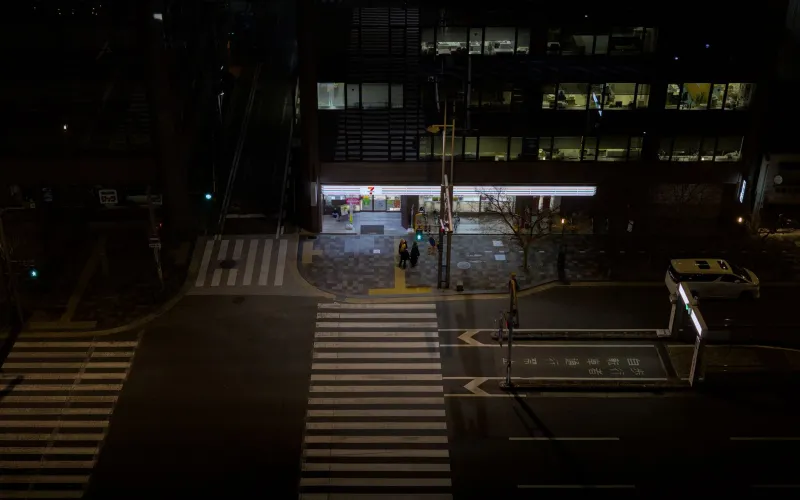
It's 2:47 a.m. in Hakata, and Kenji is doing what he does every Tuesday through Saturday night: restocking the onigiri section of a Family Mart while a single salaryman nurses a canned highball near the magazine rack, not reading anything, just existing in the fluorescent light like a man who has run out of other places to be.
Kenji doesn't mind the quiet. After four years on the night shift, he's made a kind of peace with the particular texture of these hours — the way the city sounds different, the way customers at 3 a.m. are almost universally either desperate or philosophical, rarely anything in between.
"Daytime people have somewhere to be," he says, sliding a row of tuna mayo into position with practiced efficiency. "Night people are just... here. It's more honest, maybe."
This is Kyushu after dark — not the version that shows up in travel guides, with its glittering yatai stalls and neon izakayas, but the version that persists once those lights go off. A shadow economy of labor, running parallel to the daylight world, sustained by a rotating cast of workers who have chosen, or been chosen by, the hours that everyone else is sleeping through.
The Invisible Infrastructure
Every city runs on its night workers. Americans understand this in the abstract — we know someone has to stock the shelves and mop the floors and staff the ER at 4 a.m. But we rarely think about them as a coherent economic layer with its own culture, its own hierarchies, its own relationship to the city they're maintaining.
In Kyushu, that layer has a particular character. Unlike Tokyo, where the sheer scale of the night economy creates something almost like a parallel daytime world — packed 24-hour gyms, crowded ramen shops at midnight, subway cars full of people even at 3 a.m. — Kyushu's nocturnal economy is quieter, more intimate, and in many ways more revealing of what the region actually values.
The workers here know each other across industries in ways that Tokyo's night workers often don't. The nurse finishing her shift at Fukuoka University Hospital stops at the same convenience store as the pachinko floor manager heading in for his. The ramen cart vendor knows the names of the taxi drivers who park nearby between fares. There's a social fabric to Kyushu's night that feels less anonymous than its daytime equivalent.
The Pachinko Floor at 4 a.m.
If you want to understand the night economy's relationship to Japanese society, spend some time in a pachinko parlor between midnight and dawn. The machines never stop. The noise — a particular kind of mechanical cacophony that is genuinely unlike anything else in human sonic experience — doesn't diminish. But the clientele shifts.
The after-midnight crowd at a Kokura pachinko hall is different from the evening crowd. Younger, often. More solitary. People who are there because they have nowhere else they particularly want to be, or because the rhythmic, low-stakes stimulation of the machines scratches something that the quiet of an apartment can't reach at this hour.
Mari, who has worked the floor of the same Kitakyushu parlor for seven years, has developed what she describes as an almost clinical ability to read her customers. She can tell within minutes who's chasing losses and needs to be watched, who's just killing time before an early shift, who's a regular using the place as an unconventional form of social connection.
"People think this job is just walking around looking at machines," she says during a break, the roar of the floor muffled slightly by the staff room door. "It's actually people management, constantly. You're reading the room all night."
Automation is coming for parts of her job — newer parlors have reduced floor staff through sensor systems and app-based customer service — but Mari is skeptical that it can replace the human element entirely. "A machine can't tell when someone's had a bad week and just needs someone to nod at them," she says. "That's what half this job actually is."
The Ramen Cart and Its Customers
The yatai — Fukuoka's famous open-air food stalls — mostly close before midnight. But the ramen carts that set up in the darker corners of Nakasu and around the bus terminal run later, serving the crowd that emerges after everything else has shut.
Hiroshi has been running his cart since his early forties, after a career in restaurant management that he describes with the weary affection of someone talking about an ex-partner. He chose the night shift deliberately. "Daytime ramen is about families, about lunch breaks, about people in a hurry," he explains, ladling broth with the ease of a man who has done it ten thousand times. "Night ramen is about something else. People are slower. They actually taste it."
His regulars include a rotating cast of characters that reads like the guest list for a very specific kind of party: nurses, cab drivers, bar staff walking home, the occasional college student who stayed too late at a friend's apartment, and — with surprising frequency — older men who simply can't sleep and have decided that a bowl of tonkotsu at 1 a.m. is a reasonable response to insomnia.
Hiroshi knows most of them by order, if not by name. He's heard more confessions, more half-formed life plans, more genuine expressions of loneliness and contentment than he could ever catalog. "The cart is like a confessional," he says, not unhappily. "People tell you things they wouldn't say in daylight."
Automation at the Threshold
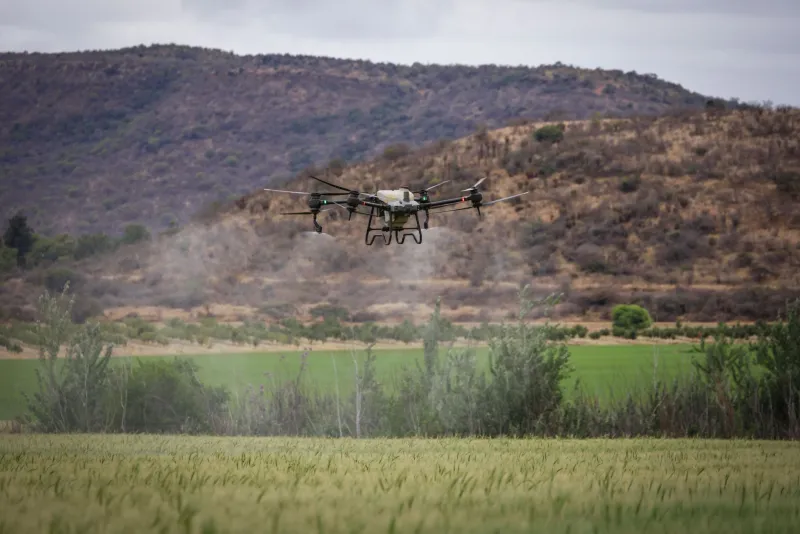
The night economy in Kyushu is changing, and not entirely by choice. Convenience store chains are piloting self-checkout expansions and AI inventory management that could reduce overnight staffing significantly. Hospital systems are evaluating automated monitoring systems that would allow fewer nurses to cover more patients during overnight hours. Even pachinko operators are investing in machine-learning systems to flag problem gamblers without human intervention.
The workers navigating these changes tend to have complicated feelings about them. Nobody is enthusiastically pro-automation when it's their job being discussed. But there's also a pragmatic recognition, particularly among younger night workers, that the labor shortage driving automation isn't going away — and that some version of changed work is probably preferable to no work at all.
Kenji, restocking his onigiri at nearly 3 a.m., puts it plainly: "If a machine can do the parts of this job that are just moving things from one shelf to another, fine. But somebody still has to be here. The guy over there" — he nods toward the salaryman, who has moved from the magazine rack to a stool near the hot food case — "he's not here for onigiri. He's here because there's a light on and a person in it."
That, perhaps, is the night economy's most durable feature. Not the labor, exactly, but the presence. The signal that someone is awake, that the city is still running, that you're not entirely alone in the dark hours between one day and the next.
Kyushu keeps that light on. Quietly, mostly invisibly, shift after shift.