Leaving Silicon Valley for Sake: The Foreigners Apprenticing at Kyushu's Ancient Breweries
Daniel Marsh spent eight years writing code for a mid-size software firm in Austin before he ever tasted a sake that genuinely stopped him in his tracks. It happened at a small izakaya in Fukuoka, on what was supposed to be a two-week vacation. The owner poured him something from an unlabeled carafe — cloudy, faintly sweet, with a finish that lingered like a conversation you didn't want to end. By the time he flew home, he'd already emailed three breweries in Saga Prefecture asking if they'd take on an apprentice.
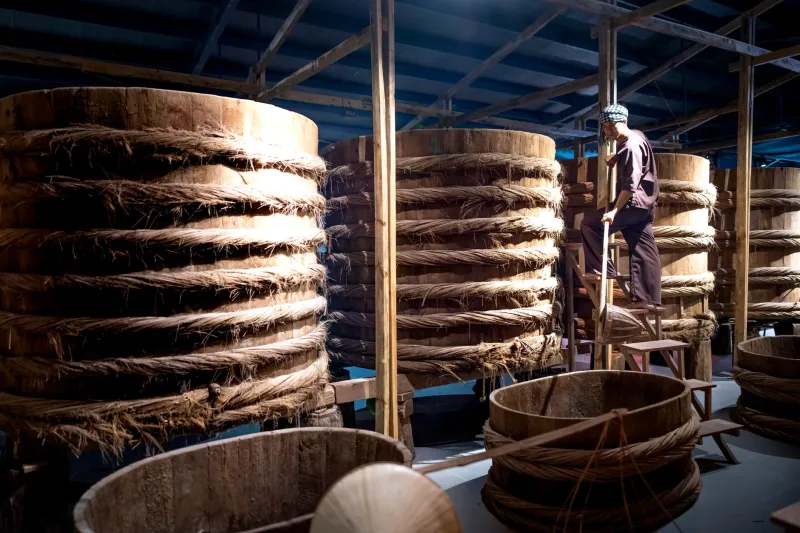
That was four years ago. Today, Marsh works as a junior kurabito — a brewery worker — at a family-run sake operation that has been fermenting rice in the same wooden building since the Meiji era. He wakes up before dawn. He hauls bags of koji-treated rice. He cleans tanks that have been in continuous use for longer than his home country has had a national highway system. He would not trade any of it.
"I kept waiting to miss the salary," he says, laughing. "I still haven't."
Why Kyushu, and Why Now
Japan has hundreds of sake-producing regions, but Kyushu occupies a particular sweet spot for newcomers to the craft. The island is better known for shochu — its own beloved rice-and-sweet-potato spirit — which means sake breweries here have historically operated with a slightly lower profile than their counterparts in Niigata or Hyogo. That quieter reputation, paradoxically, makes them more accessible. Some are actively looking for help.
Japan's sake industry has been dealing with a slow-motion demographic crisis for decades. The average age of a brewery worker has crept steadily upward, and rural areas of Kyushu — like Saga's Kashima region or the mountain towns of Kumamoto — struggle to attract young Japanese workers who increasingly prefer city life. A handful of breweries have responded by opening their doors, cautiously, to foreign applicants willing to commit to multi-year apprenticeships.
The numbers are still small. Nobody is calling this a movement yet. But the people paying close attention — sake exporters, cultural journalists, industry groups — say the trickle is becoming harder to ignore.
The Learning Curve Is Steep, and That's the Point
Ask any of the foreign apprentices currently working in Kyushu breweries what surprised them most, and the answer is almost always the same: how physical it is. Sake brewing is not a craft you can absorb from YouTube tutorials or weekend workshops. The toji — the master brewer — reads fermentation by smell, by touch, by the particular sound the mash makes when stirred at two in the morning. That knowledge transfers slowly, through proximity and repetition, and it does not speed up for anyone.
Emma Voigt, a former UX designer from Portland who is now in her second year at a small brewery in Oita Prefecture, describes the learning process as "humbling in a way that's actually kind of addictive." She spent her first three months doing almost nothing but cleaning and observing before she was trusted to handle koji cultivation on her own. "In tech, you get feedback loops in hours. Here, you find out if you did something right six weeks later, when the batch is done. It rewires how you think about patience."
Language is the other wall everyone hits. Most Kyushu breweries operate entirely in Japanese, and the vocabulary of sake production is technical, regional, and sometimes archaic. Several of the foreign apprentices interviewed for this article described spending evenings studying brewing terminology after twelve-hour physical workdays. A few have become genuinely conversational. None claim to be fluent in the particular dialect their toji uses when he's in a hurry.
Tradition Doesn't Mean Frozen in Time
The more interesting tension isn't between foreigners and the craft itself — it's between foreign apprentices and the broader question of what sake's future is supposed to look like.
Japan's sake export market has grown significantly over the past decade, with the United States consistently ranking among the top destinations for premium bottles. American consumers, in particular, have developed a genuine appetite for craft sake that goes beyond the warm carafe at a sushi counter. Some industry veterans see foreign apprentices as a natural bridge to those markets — people who understand both the product and the customer in ways that matter commercially.
Others are more cautious. The concern isn't xenophobia so much as a fear of dilution — that outside perspectives, however well-intentioned, might gradually sand down the regional specificity that makes each brewery's product worth caring about in the first place. A sake from Kashima should taste like it came from Kashima, not from a globally optimized fermentation process designed to appeal to everyone and surprise no one.
Marsh, for his part, says he thinks about this constantly. "I'm not here to modernize anything. I'm here to learn something that took centuries to develop. The last thing I want to do is show up and start suggesting improvements after two years." His toji, he adds, has been known to end conversations about efficiency with a single flat stare.
Something the Industry Didn't Expect
What nobody quite anticipated was how the presence of foreign apprentices would affect the breweries internally — and not in the ways that make headlines.
Several brewery owners in Kyushu describe a subtle shift in how younger Japanese staff engage with the work when foreign colleagues are around. When someone from outside the culture is visibly fascinated by a technique, asking questions, taking notes, treating a centuries-old process like something worth studying seriously, it has a way of reflecting that value back onto the people who grew up taking it for granted. One owner in Fukuoka put it plainly: "Our own young workers started asking more questions after we took on a foreign apprentice. I don't fully understand why, but I'm grateful for it."
That might be the most unexpected return on what looks, from the outside, like an unusual career pivot. Not just the sake these apprentices will eventually make, but the way their presence reminds everyone around them that what they're doing every day is, in fact, remarkable.
What Comes Next
None of the foreign apprentices currently working in Kyushu are under any illusions about what a traditional brewing career looks like. It is not glamorous. The pay is modest. The hours are seasonal and brutal. The path to becoming a toji takes decades, and most people never get there.
But Marsh, now in his fourth year, says he's stopped thinking about it as a career in the conventional sense. "It's more like joining something. A lineage, almost. You're not building a product. You're maintaining something that was handed to you, and eventually you hand it to someone else." He pauses. "That's a completely different relationship with work than I ever had before."
The sake he helped produce last winter just cleared customs in California. He hasn't tasted it yet — he's been too busy with this season's rice.
Somewhere in Kyushu, a tank is fermenting. Someone who used to write code is checking on it at 3 a.m. And an industry that has survived for centuries is, quietly, finding new hands to carry it forward.