Elbow Room and Ramen: How Fukuoka's Yatai Stalls Became Japan's Great Equalizer
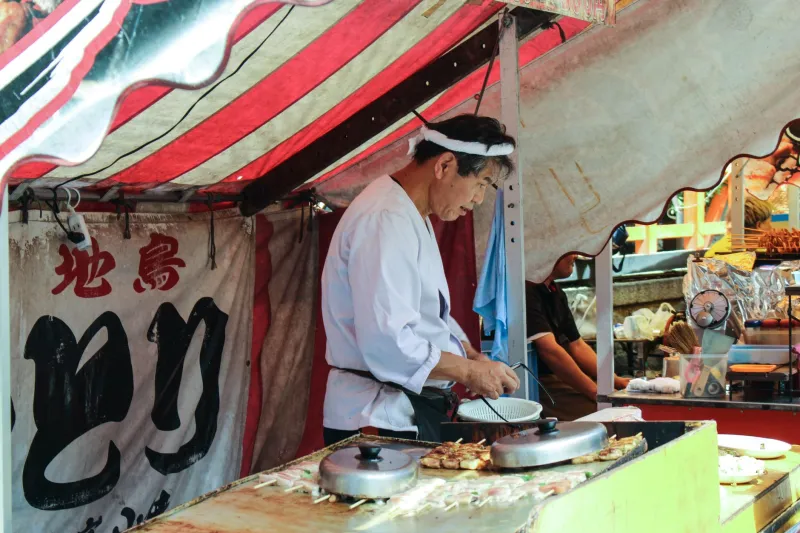
Picture this: It's 11 p.m. on a Tuesday in Fukuoka. A guy in a rumpled suit loosens his tie and squeezes onto a wooden stool. Next to him, a college student from Ohio is attempting to slurp ramen without splashing her shirt. On the other side, a retired fisherman from Hakata is nursing a cold Kirin and chatting with the cook like they've known each other for decades. Nobody planned to sit together. Nobody had to. That's just how yatai works.
Fukuoka's street food scene is something American food culture has been quietly borrowing from for years — food trucks, pop-up kitchens, communal picnic tables — but the original template was set right here in Kyushu, centuries before anyone slapped a logo on a converted taco trailer.
What Exactly Is a Yatai?
The word yatai (屋台) literally translates to something like "shop stand" or "open stall," but that description barely scratches the surface. Think of it as a fully operational restaurant that just happens to fit inside a space roughly the size of a walk-in closet — and rolls away every morning before the sun comes up.
Fukuoka is home to roughly 100 licensed yatai, concentrated mainly along the Naka River in the Nakasu district and around Tenjin, the city's buzzing commercial heart. Each stall is a one-person (or one-family) show: a single chef, a compact grill or pot, and usually no more than eight to ten seats arranged in a tight horseshoe around the cook. There are no walls. There's no host. You just walk up, find an open stool, and sit down.
The menu is almost always handwritten, often just a few items deep. And that's entirely the point.
A History Built on Hustle
Yatai culture in Fukuoka dates back to the post-World War II era, when street vendors began feeding a city trying to rebuild itself. Food was scarce, infrastructure was battered, and people needed to eat. Mobile stalls were a practical solution — low overhead, flexible locations, immediate community service.
Over the decades, what started as economic necessity evolved into cultural identity. Fukuoka's yatai didn't disappear when the city got wealthier and shinier. Instead, they became protected. The city government, recognizing these stalls as living heritage, maintains a licensing system that keeps new operators from flooding the market while honoring the families and individuals who've been running their spots for generations. Some yatai have been passed down from parent to child like family heirlooms.
That kind of institutional respect for street food? It's genuinely rare, even in Japan.
The Chef Is the Experience
Here's what separates a yatai from, say, a food court: the cook is the entire show. These aren't line cooks following a corporate recipe sheet. Many yatai masters have spent years — sometimes decades — perfecting a single dish. Fukuoka's signature tonkotsu ramen, with its creamy pork bone broth and thin straight noodles, is the obvious headliner, but you'll also find yakitori (grilled chicken skewers), mentaiko (spicy pollock roe, a Fukuoka specialty), oden (simmered vegetables and fish cakes), and gyoza that could make a grown adult emotional.
The chef is also the host, the bartender, and frequently the entertainment. Conversations happen naturally across the counter. A yatai master worth their salt knows their regulars' orders, remembers which tourists came back for a second visit, and has an opinion about baseball, politics, and the best way to season a pork belly that they're not shy about sharing.
For American diners used to the transactional rhythm of restaurant service — order, eat, pay, leave — this kind of intimacy can feel almost disorienting at first. Then it feels like exactly what you didn't know you were missing.
Why "Democratic" Isn't Just a Buzzword Here
In most of the world's major cities, food quality and social mixing tend to be inversely related to price. The best meals are behind velvet ropes. The accessible spots cut corners. Fukuoka's yatai system quietly rejects that logic.
At a yatai, a bowl of exceptional ramen costs roughly $8 to $12 USD. The person next to you might be a local politician or a fisherman or a group of American exchange students who found the stall by following the smell. There's no dress code, no reservation list, no table minimum. The physical setup — everyone facing the same direction, seated inches apart — makes small talk almost mandatory. Social hierarchies don't dissolve entirely, but they loosen considerably when you're all hunched over the same steaming bowl in the night air.
This is something America's food truck movement has been chasing for years with varying success. The difference is that yatai culture wasn't designed as a lifestyle brand. It emerged organically from necessity and survived through genuine community attachment.
What American Food Culture Can Actually Learn Here
The U.S. has no shortage of street food traditions — from New Orleans' po'boy stands to LA's taco trucks to the crab cake vendors at Baltimore's waterfront. But there's often a gap between the food being great and the experience creating genuine connection.
Fukuoka's yatai close that gap through constraint. The tiny footprint forces proximity. The limited menu forces mastery. The absence of walls forces engagement with the street, the weather, the city around you. It's uncomfortable in exactly the right ways.
For any American food entrepreneur, traveler, or enthusiast thinking about what community-centered dining could look like, spending a night hopping between yatai in Tenjin is essentially a crash course. You don't just eat well — you understand, viscerally, why people keep coming back to the same stool, talking to the same cook, in the same spot they've been coming to for thirty years.
Finding Your Stall
If you're planning a trip to Fukuoka, skip the TripAdvisor algorithm for one night and just walk along the Naka River after 8 p.m. Look for the warm glow of lanterns and the steam rising from a pot. If there's a stool open, sit down. Point at what the person next to you is having if the menu looks intimidating. Say sumimasen (excuse me) to get the cook's attention.
The rest takes care of itself.
Fukuoka's yatai have survived wars, recessions, urban redevelopment, and a global pandemic. They're still here because they offer something no app can optimize and no chain restaurant can replicate: the simple, radical experience of strangers sharing a good meal in the open air, with nowhere else to be.